
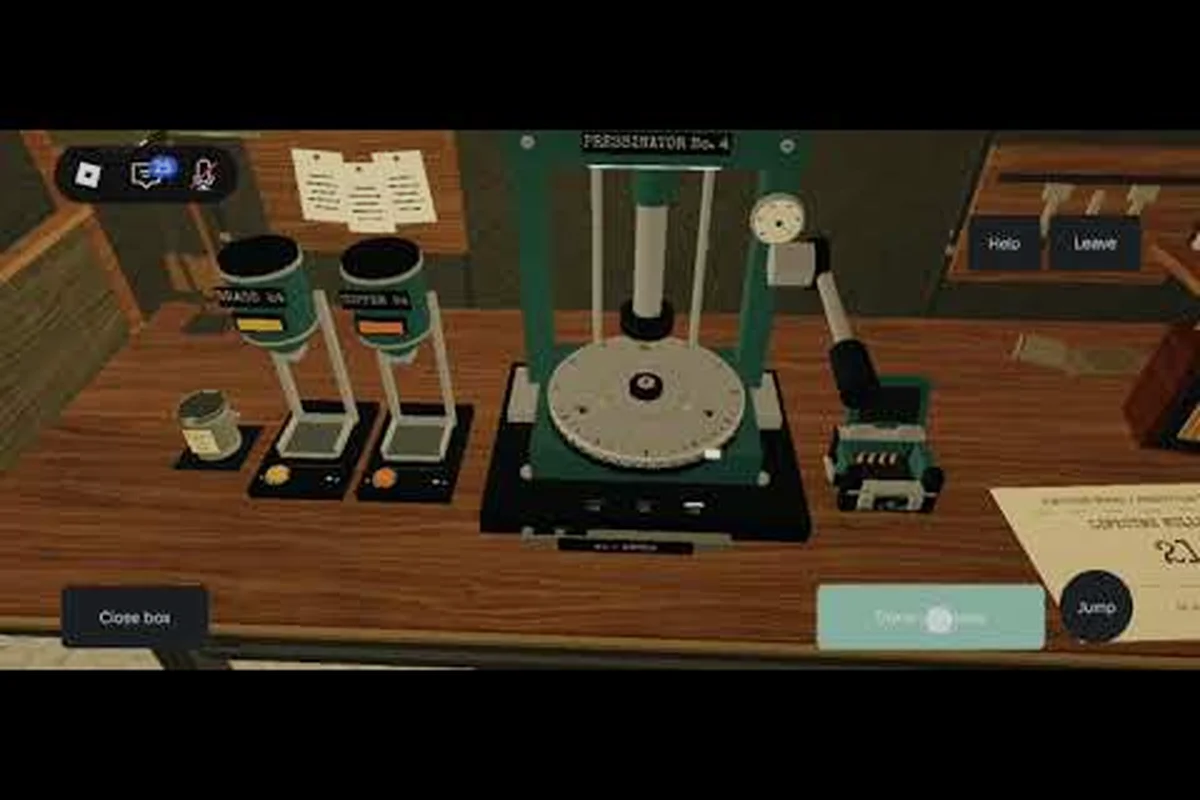
BRASS HELL story documents turn careful exploration into a rewarding hunt for factory secrets. Check each zone’s side rooms, compare the map’s marked locations with rooms already cleared, and revisit locked or overlooked areas whenever a new route becomes available. A document found beside a machine or service corridor can reveal a missing character lead, clarify an objective, or point toward another file, so the map is most useful as a coverage tracker rather than a straight path. Tracking every zone against the map helps prevent skips, while collecting all files exposes how the factory’s zones connect and turns scattered evidence into a coherent BRASS HELL story.
How BRASS HELL Story Documents Fit the Factory Map
BRASS HELL story documents are collectible pieces of evidence scattered through the factory’s connected rooms, workshops, storage spaces, and service corridors. Because they reward attention to environmental details, the BRASS HELL map becomes more than a fast-travel reference: it is the framework for planning a complete search. A document may sit in plain sight, but others require entering less obvious BRASS HELL locations, checking corners, or inspecting spaces near machinery.
The best approach is to combine three layers of information: the overall layout, the visual language of each room, and a repeatable room-clearing routine. You do not need a pixel-perfect tour for every run, but you should understand where the major zones connect and how the factory’s passages branch. For a broader view of stations and routes, use the BRASS HELL factory map before beginning a thorough sweep.
| Map layer | What it helps with | Practical use |
|---|---|---|
| Major zones | Understanding the factory’s overall structure | Plan a clockwise or counterclockwise sweep |
| Connecting corridors | Revealing routes between workshops and storage | Detect detours missed during a direct run |
| Side rooms | Separating optional evidence from main-path items | Plan brief branches off the primary route |
| Visual landmarks | Remembering a room after one visit | Recognize it without relying on a precise minimap |
| Document prompts | Narrowing a search within a suspicious area | Check desks, shelves, papers, and nearby workstations |
Separate Route Planning From Item Inspection
A reliable search depends on two separate habits: knowing where to go and knowing where to look. Route planning prevents obvious dead ends from consuming your attention, while item inspection ensures that you actually examine environmental details in every room. Skipping either step creates gaps in a BRASS HELL finding all files run.
First, identify the room’s purpose from its equipment and layout. Offices suggest desks, filing cabinets, and wall notices; workshops suggest workbenches and control stations; storage zones suggest crates, shelves, and paperwork; utility corridors may contain abandoned lockers or noticeboards. Community reports commonly describe many documents as ordinary environmental pieces rather than glowing rewards, so visual scanning matters more than assuming every collectible will announce itself.
Establish a Repeatable Room-Clearing Pattern
Choose one order and use it during every exploration session. Some players sweep from the outermost entrance inward, while others start near the center and work toward the perimeter. The best pattern is one that prevents you from passing through a completed area again, because repeated backtracking is where unnoticed documents are most likely to remain.
| Sweep pattern | Best use | Main advantage | Main risk |
|---|---|---|---|
| Outer edge inward | First full collection run | Reaches isolated branches before the route closes | Longer movement between early finds |
| Central hub outward | Players who know the hub layout | Makes it easy to cover several directions | Easy to miss a peripheral side room |
| Zone-by-zone | Repeated farm sessions | Easy to remember individual checklists | Requires accurate zone boundaries |
| Landmark sweep | Open-ended exploration | Relies on memorable props and landmarks | Less consistent without notes |
A complete route should cover every named BRASS HELL zone, every unlocked connector, and every accessible side room. If one passage is sealed, revisit it after finding the proper key, tool, or route condition instead of assuming no document can be nearby. The factory areas and document overview provides a useful companion when organizing that broader pass.
BRASS HELL Map Navigation for a Complete Search
Effective BRASS HELL map navigation depends on landmarks rather than memorizing every pixel. The factory contains machinery, wall markings, workstations, and storage arrangements that can make a room recognizable from a new angle. Before entering a distant zone, pick one feature to serve as its visual anchor, then use the same anchor when returning.
Use the Minimap as a Route Checklist
The minimap is most useful when you treat it as a record of completed branches. Mark each side room mentally as checked, open, blocked, or worth revisiting. A crowded map can make an explored route look unfinished, especially when corridors overlap visually. A simple four-state system prevents that ambiguity and makes the next search much faster.
| Minimap state | Meaning | Next action |
|---|---|---|
| Checked | Entered and searched thoroughly | Move on unless a clue points elsewhere |
| Open | Visible but not fully searched | Revisit the nearest connected junction |
| Blocked | Route stops at a lock, obstacle, or gate | Record the requirement and return later |
| Unclear | Landmark or corridor shape is confusing | Approach from another direction before marking it |
Community experience suggests that finishing every branch matters more than optimizing the shortest route. During BRASS HELL finding all files attempts, repeated short visits can uncover pages that a single hurried crossing would miss. Keep the route disciplined, but do not let speed pressure you into skipping desks or shelves.
Check Both Sides of Every Junction
At a three-way intersection, inspect the left branch and right branch rather than automatically following the route toward your next objective. Side passages often lead to storage, utility rooms, or short dead ends, and those spaces are natural places for story evidence. The delivery area exploration route is a good example of how a smaller destination can reward a deliberate branch.
A useful junction rule is simple: turn once, turn twice, then verify the return path. Turn once means checking the first side branch, while turn twice means circling back to confirm there was no opening behind the entrance. This habit catches doorways that blend into the wall and prevents you from leaving a pocket unexplored after a quick glance.
Revisit Locked Routes With a Purpose
A locked passage should be logged as an unresolved route, not treated as a completed zone. Before moving on, identify what the obstacle communicates: a key shape, colored mechanism, broken tool, power requirement, or environmental mismatch may point toward a later objective. Returning with that requirement fulfilled is much more efficient than repeatedly checking the same door.
| Obvious clue | Likely route concern | Better response |
|---|---|---|
| Specialized key shape | The connected area requires another access item | Mark it as blocked and follow key-related leads |
| Damaged tool | Equipment may need repair or replacement | Identify the relevant workstation or material |
| Power or pressure requirement | The path depends on an environmental switch | Trace nearby controls and test alternate branches |
| Rubble or broken structure | The route may open after an event or interaction | Return during a later progression stage |
This staged approach preserves BRASS HELL locations that would otherwise be skipped permanently, while keeping the BRASS HELL map usable as a progression checklist rather than a record of permanently closed routes. It also helps distinguish a genuine route lock from an ordinary wall: for example, a specialized key shape may connect to a later-access zone, whereas a rubble blockage can sometimes clear after a story event. Logging the obstacle, its required item or interaction, and the zone it guards prevents wasted revisits during a focused search for BRASS HELL story documents and all-file completion.
Likely Hiding Spots for BRASS HELL Story Documents
Most story pages are integrated into the factory’s working environment, so the most productive search points are surfaces associated with labor, recordkeeping, and maintenance. Desks, cabinets, clipboards, wall notices, and paperwork placed near relevant machinery can all frame a document. The surrounding objects often provide clues about who handled it and why it matters.
Workstations and Administrative Furniture
Administrative furniture offers some of the cleanest document checks because it naturally contains records. Inspect desktops, folders, inboxes, shelves, and nearby chairs before moving on. If a desk is covered by machinery or clutter, rotate the camera around its edges because small interactable objects can be visually compressed by the first-person view.
| Priority | Check first | Why it is promising |
|---|---|---|
| 1 | Desks and document trays | Records naturally fit the work performed there |
| 2 | Filing cabinets and shelves | Storage explains why pages were separated from other papers |
| 3 | Noticeboards and wall papers | Environment designers often use flat surfaces for readable clues |
| 4 | Workbench corners | Personal notes may sit near tools rather than in a formal archive |
| 5 | Abandoned chairs or personal effects | Human-scale details often carry narrative significance |
Do not rely on the interaction prompt alone. Some collectibles may be visible before they become interactable, while others may sit near a usable object and require a closer look. Keep the crosshair on the entire surface, including corners and partially covered edges, because camera distance often determines whether a small detail becomes readable.
Storage Rooms and Crates
Storage zones can become visually repetitive, which makes them both productive and easy to underestimate. Crate faces, lids, shelving gaps, and office areas inside the same storage wing may each hold separate records. Check both the front and side of large stacks rather than treating the entire pile as one object.
For crates, scan in horizontal bands. Begin at floor level and move upward, because the lower rows are often blocked by the first stack and therefore receive less attention. Then check the spaces behind or beside accessible shelving. If the route branches between storage aisles, treat each aisle as its own short checklist instead of searching the room as one undivided area.
Hallways, Break Areas, and Service Corners
Transitional spaces often contain documents related to the people who used them. Benches, lockers, noticeboards, vending areas, and small service alcoves can provide context about workers and events that larger production rooms cannot. These spaces may also be where a side route branches away from the main corridor, making careful BRASS HELL map navigation essential.
Look for the less theatrical details: a single sheet attached to a locker, a clipboard resting on a bench, or a folder beside a time clock. Environmental storytelling often works through accumulation, so several ordinary objects can gradually reveal the factory’s history even when each one seems minor at first.
A Room-by-Room Document Search Routine
A repeatable routine turns a large exploration task into a manageable series of short searches. Start at the edge of the current zone, advance toward its hub, and inspect both sides of the route. The exact factory map may contain changing access points, so treat blocked passages as future tasks rather than fixed walls.
Prepare Before Leaving the Previous Area
Before moving to another BRASS HELL zone, make a quick final pass over the area you just left. Check office desktops, the nearest wall notice, the last shelf, and any corner partly hidden by machinery. This final sweep often finds a page that looked like scenery while the room’s main objective was active.
Use a simple checklist for each room, but record its location before leaving the previous BRASS HELL zone: note the room’s identifying signs, nearby landmarks, and the exact spot where a story document was found. For example, a file hidden beside a desk can be associated with that workstation, while one near a wall notice should be tied to the notice’s position. This creates a location-based checklist for the BRASS HELL map, helping distinguish documents in adjacent zones and prevent missing a file during navigation.
-
Enter slowly: Look at the ceiling line, far wall, and floor edges before moving forward.
-
Scan the center: Check desks, tables, machines, and character-sized objects in the room’s main sightline.
-
Circle the perimeter: Inspect corners, shelving sides, doors, and areas behind foreground objects.
-
Test every side opening: Look through connected passages and short dead ends before turning back.
-
Confirm the exit: Repeat a quick glance toward the entrance, since some evidence sits near the doorway.
Match Each Document to Its Environmental Clue
As you collect pages, note what surrounds them. A page near a schedule may explain routines; a memo beside maintenance records may point to an incident; and a personal note may reveal a perspective that official reports omit. This method turns BRASS HELL story documents from isolated collectibles into a narrative sequence. The document explanation and hidden-lore overview can help connect collected evidence with the factory’s broader history.
| Clue near the page | Likely narrative function | Reading priority |
|---|---|---|
| Schedule, roster, or timetable | Establishes routines and who was present | High |
| Official report or memo | Presents an institutional account of an event | High |
| Personal letter or note | Adds an individual perspective | Very high |
| Warning, repair log, or maintenance slip | Hints at danger or a concealed incident | High |
| Routine form or obsolete record | Supports environmental context | Medium |
Do not discard a page because it seems repetitive. A mundane form can establish what changed later, while an official report may appear reliable until another document contradicts it. Keeping a mental sequence is enough for a first playthrough; a short written note list becomes useful during a farm run.
BRASS HELL Locations and Zones to Prioritize
Not every location deserves equal attention at the beginning. Some rooms offer obvious paperwork, while others need more patient perimeter checks. Prioritize locations with several distinct surfaces, limited visibility, or more than one exit. Those spaces create the greatest possibility of a missed document.
High-Yield and Low-Yield Spaces
Use the room’s visual complexity as a practical ranking. A room packed with large machines has many occlusion points, so one quick camera sweep may miss a page. An empty corridor offers fewer hiding places but can contain an isolated file or notice at the far end. This does not make any space safe to ignore.
| Location type | Search difficulty | Typical yield pattern | Search priority |
|---|---|---|---|
| Offices and records rooms | Low to medium | Several pages among desks, trays, and cabinets | Very high |
| Storage areas | Medium | Pages spread across crates and shelf gaps | Very high |
| Production workshops | High | Records share space with large machinery | High |
| Maintenance corridors | Medium to high | Notes may sit near lockers or control boxes | High |
| Small service rooms | Medium | One or more pages reward a full perimeter check | High |
| Straight empty corridors | Low | Isolated wall or floor notice | Medium |
| Previously searched dead ends | Low | Usually little value unless revisits revealed changes | Low |
Sweep Every Connected Zone
A zone-by-zone sweep is the safest method for BRASS HELL finding all files because it forces you to treat the factory as a complete network. Start with one major destination, clear its surrounding rooms, then follow every nearby connection. Keep the four-state minimap method active so unresolved branches remain visible for the next pass.
The map walkthrough and location overview is useful when you need to revisit the larger setting with a lore-focused purpose. After collecting a page, return to the relevant area and look for objects that reinforce its message. Corridors and workshops often gain new meaning after the story advances, making a second pass useful even if you have already searched them.
Use a Second Pass to Catch Missed Clues
A second pass is most effective when you change your attention pattern. If the first sweep focused on desks, spend the second sweep on walls, floors, lockers, and rear corners. If the first pass moved quickly through the main aisle, reverse direction and begin with the last room you remember.
The second pass should also account for progression. A formerly blocked path may now open, while an interactable object may become highlighted after completing a related task. Record unresolved routes instead of assuming they are permanently closed. This incremental method makes BRASS HELL locations easier to audit and prevents a missed room from disappearing into the larger factory layout.
Troubleshooting a BRASS HELL Document Hunt
Most incomplete hunts result from one of four problems: a misunderstood interaction prompt, a poorly marked side room, an overlooked locked route, or a change in access after progression. Diagnosing the cause is faster than repeatedly circling the same spaces.
Separate “Not Interactable” From “Not Visible”
When a page appears in the environment but cannot be collected, move closer and point directly at it. Check whether another interactable object is intercepting the prompt, especially when papers overlap a desk, clipboard, or machine. If nothing changes, continue the room search because the apparent page may belong to a different clue or a decorative texture.
| Symptom | Likely explanation | Corrective action |
|---|---|---|
| Prompt names another object | Overlapping interactable | Step sideways or change the viewing angle |
| No prompt appears | Object is farther away or partly occluded | Approach it directly and scan its edges |
| Page is visible but the counter does not change | Wrong object or decorative paper | Continue checking nearby surfaces |
| Counter remains incomplete | One route or room is still unresolved | Audit blocked branches and repeated areas |
Preserve Route Notes for Future Sessions
Keep notes specific enough to act on. “Check the factory” is too broad, while “inspect the right-side storage aisle and the office behind the locked door” identifies a manageable target. If you use a farm session for collectibles, record the last route stage, unresolved access conditions, and any room that required a closer camera angle.
A second note column can record likely clue themes. This turns an inventory list into a narrative tracker and helps you recognize which parts of the factory’s history are still undocumented. Over time, the gaps in the story become easier to connect, especially when several pages refer to the same incident, workstation, or group of employees.
Frequently Asked Questions
Where should I search for BRASS HELL story documents?
Search desks, filing cabinets, shelves, workbenches, noticeboards, crates, lockers, and corners near active machinery. The best approach is to clear each room from multiple angles, inspect both sides of junctions, and record locked passages for later. Story pages often blend into the factory environment, so slow camera checks are more reliable than quick straight-line movement.
Can I collect every document during one playthrough?
Some routes may depend on progression, keys, repaired tools, or events that open later access points. A single careful pass can find many pages, but a complete collection may require revisiting the factory after unlocking additional areas. Keep blocked passages marked and clear side rooms before moving on, which helps you identify the exact places that still need attention.
What is the quickest way to avoid missing files?
Use a clockwise, counterclockwise, or zone-by-zone route and treat every branch as a separate search. At each junction, check both directions and make a final glance toward the entrance. Most missed documents come from skipped side rooms or corners hidden behind machinery rather than from genuinely inaccessible spaces.
Do BRASS HELL story documents change the ending or lore?
The documents provide direct context for events, routines, and competing accounts within the factory. Reading them in chronological or environmental order can reveal details that are not obvious from objectives alone. The endings may still depend on story choices, but collecting the files produces a fuller account of what happened and why particular locations matter.
Should I revisit rooms after collecting a nearby document?
Yes. A later page can reveal that another object deserves attention, especially near administrative desks, maintenance logs, or restricted workspaces. Progress may also unlock routes that were previously blocked. After each major narrative step, revisit nearby zones and scan for new interactables while using your earlier notes to target incomplete branches.