
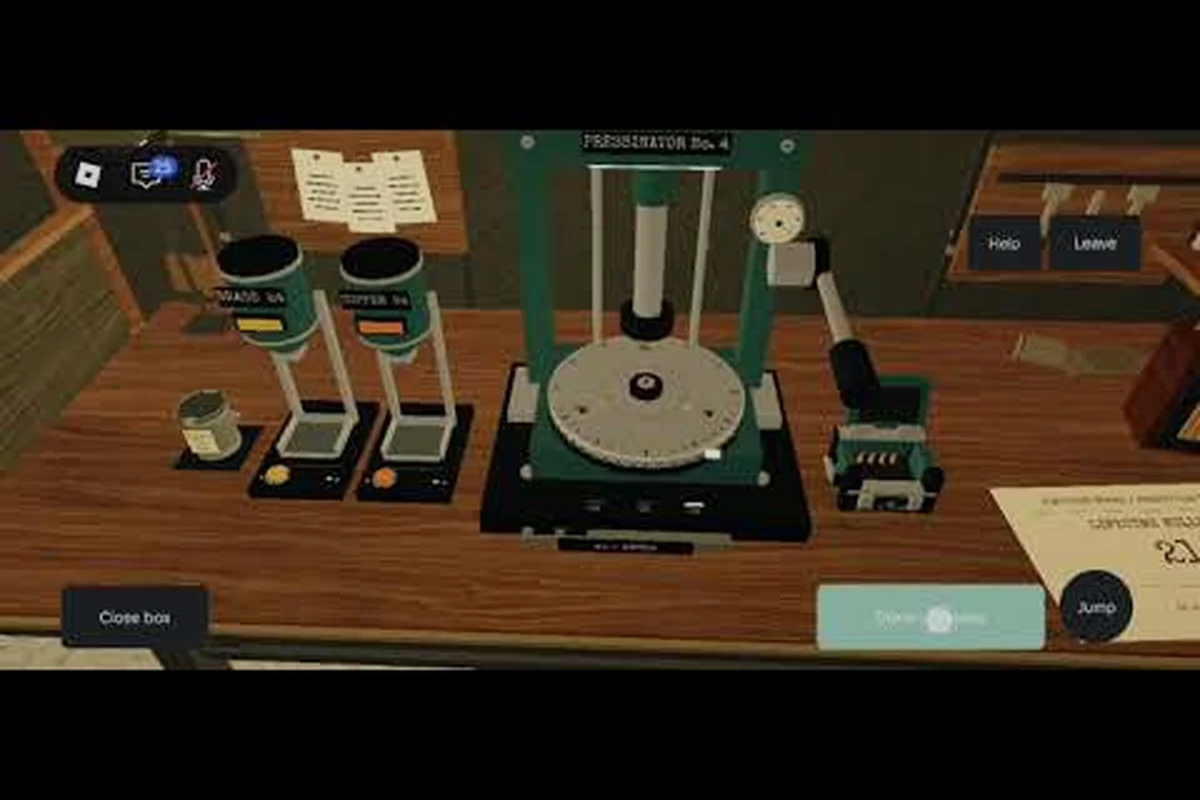
The BRASS HELL new update dated October 31 adds a Halloween title tag, but no public changelog confirms new content. That distinction matters because the store title alone does not reveal a corresponding BRASS HELL patch-note entry, version-history revision, or Early Access feature addition. The title tag may therefore reflect seasonal metadata rather than a gameplay release, so any claimed Halloween content should be treated as unverified until the developer publishes an update log, patch notes, or an in-game announcement.
BRASS HELL New Update: What Changed on October 31
The BRASS HELL new update dated October 31, 2026, appears to be a metadata or storefront update rather than a documented content expansion. The clearest confirmed change is the addition of a Halloween Title Tag to the game’s page. That tag may improve seasonal presentation, but it does not by itself prove that new missions, enemies, weapons, maps, or rewards have entered the game.
This distinction matters because store tags are often added for visibility, promotion, or seasonal merchandising, while meaningful balance changes normally appear in dedicated patch notes. No official BRASS HELL update log or detailed changelog accompanies the dated change in the available information, so the tag should not be treated as evidence of a larger gameplay release.
| Visible update signal | What it establishes | What it does not establish |
|---|---|---|
| October 31, 2026 page date | The listing received a dated update | A full content expansion |
| Halloween Title Tag | Seasonal positioning has changed | New Halloween missions or rewards |
| No published itemized changelog | Specific changes remain undocumented | That no smaller fix was included |
| No public roadmap entry | Future timing cannot be estimated | That further development has stopped |
This distinction matters because store tags are often added for visibility, promotion, or seasonal merchandising, while meaningful balance changes normally appear in dedicated patch notes. No official BRASS HELL update log or detailed changelog accompanies the dated change in the available information, so the tag should not be treated as evidence of a larger gameplay release. Players can still use the October 31, 2026 page date and Halloween Title Tag as a storefront timeline, but the absence of a published BRASS HELL version history or itemized BRASS HELL patch notes leaves the practical effect on Early Access unclear. Checking the live game client for a build number, loading-screen notice, or revised weapon and enemy behavior is more reliable than assuming the BRASS HELL Halloween update added missions or rewards.
Seasonal Metadata Versus Gameplay Content
A title tag describes how the product is presented; it does not describe what the current build contains. For example, a Seasonal Identity Tag may help an event-oriented listing stand out during October, but it says nothing about an event mode. A playable Halloween update would normally need rules, access conditions, rewards, and a release note.
The available evidence supports a narrower conclusion: Presentation Update Confirmed. For BRASS HELL, this means a listing or title tag changed, but the current build has not demonstrated a new Halloween event mode, reward track, or playable seasonal ruleset in its update log and patch notes. Players seeking deeper event information can consult our Halloween event and seasonal update reference, which separates announced seasonal features from decorative listing changes and helps distinguish metadata changes from an actual BRASS HELL version update.
Why the Date Matters for Version Tracking
The October 31 date serves as a useful checkpoint for BRASS HELL’s version history because it marks the specific Halloween-tagged storefront listing state, separating that snapshot from later BRASS HELL early access storefront changes. For example, a player comparing the October 31 page with a subsequent listing can identify when the update became visible without assuming that every change was a major release or that the date corresponds to a distinct internal build number.
However, a storefront date is not automatically an internal build number. BRASS HELL may receive fixes, save adjustments, balance tuning, or platform-specific corrections without every change becoming a major public release. Date-based tracking should therefore remain descriptive rather than technical.
| Tracking method | Reliability for this change | Best use |
|---|---|---|
| Store page date | Confirmed for the page change | Locating the October state |
| In-game build indicator | Useful if displayed | Identifying the installed client |
| Itemized patch notes | Best for gameplay changes | Understanding balance adjustments |
| Social announcement | Depends on the original source | Confirming developer intent |
| Community report | Useful as a lead, not final proof | Locating possible undocumented changes |
A reliable BRASS HELL update log therefore combines official page evidence, in-game observations, and clearly labeled community reports rather than treating one signal as a complete release history. For example, if the October 31 storefront listing shows a new description but no itemized BRASS HELL patch notes, the evidence should be recorded as a confirmed page change, not automatically as a gameplay update. An in-game build indicator can establish which client was installed, while a community report about an altered enemy, weapon, or balance parameter should remain a lead until confirmed by the developer or reproduced against the same BRASS HELL early access version. This approach keeps the BRASS HELL version history useful without turning an unclear signal into a definitive release.
BRASS HELL Update Log: What the October Entry Confirms
The current BRASS HELL update log has one clear entry dated October 31, 2026. This page-state update introduced the Halloween Title Tag. It did not provide a version number, a balance adjustment list, bug fixes, new content descriptions, or a schedule for additional work.
That makes the record unusually concise. A useful update log should normally separate added features, removed features, changes to existing systems, bug fixes, and compatibility work. This entry does not provide that level of detail, which limits what can responsibly be said about the game’s current build.
| Update-log category | Published detail for October 31 | Confidence level |
|---|---|---|
| New content | None specified | High |
| Gameplay balance | None specified | High |
| Bug fixes | None specified | High |
| Visual presentation | Halloween title tag added | High |
| Future content | No dated roadmap entry | High |
No Changelog Provided is the defining feature of this release record. That absence matters because it prevents a useful distinction between a promotional storefront edit and a substantial gameplay patch. Community experience can still identify possible changes, but it cannot supply an official explanation for why the tag was added.
What Would Count as Substantive Patch Notes
Substantive BRASS HELL patch notes would describe something a player can encounter in the client. That could include a new weapon with its statistics, an enemy with changed behavior, a new shift objective, a rebalanced difficulty curve, or a corrected achievement condition. It could also cover save compatibility, control adjustments, localization, and performance fixes.
A useful test is whether the note can answer three practical questions without relying on inference: what specifically changed in BRASS HELL, how that modification alters gameplay, and which platform, mode, or version receives it. For example, a balance entry should identify the affected weapon or enemy, provide the former and new values or behavior, and state whether the adjustment applies to Early Access, a specific patch, or another release scope. This standard separates actionable BRASS HELL patch notes from announcements that name a presentation or theme but provide no mechanical detail.
-
What changed? The altered feature or system must be named.
-
How does it affect play? Its mechanical effect should be described.
-
Where does it apply? The note should clarify its platform, mode, or version scope.
The October 31 entry does not satisfy that test because it only identifies the page’s Halloween presentation. Readers looking for a longer account of current release records can use the BRASS HELL update notes and version guide to organize confirmed changes without inferring missing details.
Community Reports and Evidence Quality
Player reports can reveal undocumented behavior that has not yet appeared in formal notes. They are especially useful for identifying crashes, progression blockers, altered values, or seasonal items visible only after certain triggers. Yet a report should be categorized carefully because visual assets, client state, and remembered behavior can all create confusion.
| Report type | Example of useful evidence | Treatment |
|---|---|---|
| Direct observation | A new reward appears after a specific encounter | Compare with another client state |
| Video or screenshot | A visible menu label changed | Corroborate date and version |
| Numerical observation | Damage or cost differs from a prior run | Repeat under controlled conditions |
| Memory-based claim | A feature feels new but has no baseline | Treat as a lead only |
| Rumor | An unannounced roadmap date | Do not present as confirmed |
This approach prevents the community experience from being overstated and keeps individual observations from becoming unsupported claims about the BRASS HELL update log. For example, a screenshot showing a “Halloween” label is stronger evidence when it includes the client version and a matching BRASS HELL version-history entry, whereas an uncited recollection remains only a lead. The available record does not provide enough authoritative detail to claim that the Halloween tag corresponds to a new event system, early-access feature, or permanent seasonal mode.
BRASS HELL Patch Notes: Evidence, Limits, and Interpretation
The current BRASS HELL patch notes consist of a dated page entry and a seasonal label, with no published breakdown of changed files or systems. As a result, the safest reading is that the listing received a Halloween-Presentation Refresh on October 31. The game client may also have received minor adjustments, but there is no itemized record to support specific claims.
This is not the same as saying that nothing happened. It means the available evidence cannot distinguish among several possibilities: a metadata-only edit, a small maintenance patch, or a patch that included limited seasonal content. The absence of public BRASS HELL patch notes leaves the size and purpose of the change unresolved.
| Interpretation | Supporting evidence | Missing evidence | Assessment |
|---|---|---|---|
| Store metadata refresh | Halloween title tag and page date | Internal build details | Strongest interpretation |
| Minor maintenance change | Normal possibility for any dated build | Fix list | Plausible but unconfirmed |
| Seasonal event addition | Seasonal presentation | Event rules and rewards | Not confirmed |
| Major gameplay expansion | None published | Content list and balance changes | Unsupported |
The Metadata-Limited Release interpretation remains the most defensible because it matches the strongest evidence in the table—a Halloween title tag and an October 31 page date—without treating missing internal build details as proof of a larger release. This preserves the BRASS HELL update log as a useful record while preventing a store-metadata refresh from being misreported as a major gameplay expansion or confirmed seasonal event addition in the BRASS HELL version history.
Reading Official and Community Sources Correctly
Official information should carry the greatest weight, although a storefront label is itself a limited kind of official statement. Community data fills gaps by describing what players can observe in the game. Neither category should be stretched beyond what it actually establishes.
An official announcement naming new Halloween content would be strong evidence of that content. A community screenshot could be strong evidence of a visible asset, but it would still need date, client, and mode context. A descriptive post without a changelog is best treated as interpretation rather than proof of a complete release.
Players comparing reports can also use our developer update reference to distinguish announcements from routine listing changes. The key discipline is to label the source type beside each claim rather than presenting all observations as equally official.
Why Date and Tag Should Not Become False Feature Claims
A Halloween tag can be added for a storefront event, a promotional schedule, metadata maintenance, or broader seasonal awareness. Inferring an event from that label risks turning a small presentational change into a major gameplay claim. This matters for search results because repeated summaries often become the apparent source of truth even when no original notes exist.
A more accurate summary would read: “BRASS HELL’s October 31, 2026 page update added a Halloween title tag; no public itemized changelog was provided.” This wording communicates Page Change Confirmed without adding unsupported claims. It also gives players a clear expectation: verify the client, compare observed behavior, and wait for an itemized release note before assuming a full seasonal feature.
BRASS HELL Halloween Update: What Players Can Verify
Players can verify the October update by examining several layers rather than relying on the title tag alone. Start with the live store listing, confirm the displayed date and seasonal label, then compare the current client with earlier recordings or personal notes. Look for menus, objectives, rewards, enemy behavior, and balance values that can be compared directly.
The goal is not to force a conclusion where none is available. It is to create a repeatable observation process that separates visible evidence from assumptions. A strong player report includes the client version, platform, mode, encounter, and expected-versus-observed behavior. Vague statements such as “the game feels different” are difficult to verify and should not be used as proof that Halloween content arrived.
| Verification step | What to record | Why it matters |
|---|---|---|
| Check the listing | Page date and title tag | Confirms presentation change |
| Record client state | Build or version label | Establishes the tested state |
| Compare menus | New tabs, labels, or options | Detects interface additions |
| Inspect rewards | Item names and acquisition conditions | Confirms functional content |
| Compare encounters | Enemy behavior, damage, or objectives | Detects gameplay changes |
| Review announcements | Dates and developer wording | Separates intent from observation |
Reproducible Observations are more valuable than broad conclusions when assessing the BRASS HELL Halloween update. A single clear screenshot of an unfamiliar reward may reveal a new item, while a side-by-side comparison table across two builds can establish when the change became visible. For example, recording whether a Halloween reward appears in the current client—but not in an earlier Early Access build—provides stronger evidence than claiming that the update changed progression, because it links the visible reward icon and acquisition condition to a specific build number.
Run One Controlled Session Per Test
Begin with a controlled session using the same character, difficulty, route, and encounter conditions whenever possible. If the goal is to test combat, avoid changing equipment and settings simultaneously, because that makes numerical differences difficult to isolate. For UI tests, record the full menu path so another player can reproduce it.
Next, compare the result against a prior session. Record exact item names, trigger conditions, and timing. Exact Labels Over General Descriptions improve both reproducibility and search accuracy, since a precise item name can be checked later against official notes while a vague description cannot.
Finally, label the result by confidence. “Confirmed in client on October 31” is stronger than “reported by players,” and “possible in Early Access” must not be presented as a stable public release. If no comparison point exists, describe the observation without assigning a cause.
What Would Confirm a Full Halloween Event
A full seasonal update would normally include one or more player-facing systems: an event rule, limited-time objective, cosmetic collection, special reward, altered encounter, or dedicated menu. Confirmation would require those elements to appear in the client and ideally be explained in official notes.
Halloween Identity Without Event Mechanics is the current evidence level. The tag communicates the season, but there is no published event structure to test. This means players should avoid building a progression plan around rewards or modes that may not exist, and should treat unverified claims as placeholders until the live client or an official announcement resolves them.
BRASS HELL Early Access and Upcoming Updates: What Can Be Expected
The BRASS HELL early access state is relevant when evaluating any update, but the October 31 page entry does not identify a build, branch, balance pass, or new feature. It also does not provide a release date for the next milestone. As a result, no firm schedule can be derived from the Halloween tag alone.
A transparent outlook separates known information from likely development activity. Known information includes the dated page change and seasonal tag. Likely activity includes ordinary development or maintenance, but that remains a general expectation rather than an announcement. Confirmed future content is absent because no dated roadmap entry accompanies this record.
| Planning category | Confidence | Suitable use |
|---|---|---|
| October 31 Halloween tag | Confirmed | Describe the known page state |
| Routine client maintenance | Plausible | Monitor for build changes |
| New Halloween event | Unconfirmed | Await direct evidence |
| Future release date | Unconfirmed | Do not present as scheduled |
| BRASS HELL upcoming updates | Open-ended | Track official announcements |
No Dated Roadmap is the crucial takeaway for planning. It would be misleading to estimate a next patch by matching dates on the calendar, because a storefront edit and a gameplay milestone follow different schedules. The release and update timeline reference provides a better framework for separating released records from future possibilities.
Why Early Access Changes Expectations
Early Access often contains balance adjustments, incomplete systems, and frequent revisions. That can make a visible difference between builds even when no formal patch note is published. It does not mean every difference should be assigned to the Halloween update, since the installed client may have received other maintenance since the last documented state.
Players should record whether a change appears in Early Access, a stable branch, or another mode. Build Context Required prevents a branch-specific feature from being described as available to everyone. If the same behavior cannot be reproduced in the relevant branch, the report should say so rather than infer a universal release.
How to Monitor Without Rumor Problems
Use official announcements as the first filter, then verify their claims against the game client. Community reports can accelerate discovery, but the strongest evidence includes a clear timestamp, version, platform, and reproducible sequence. A roadmap graphic without a date may indicate direction, while a dated commitment offers stronger planning value.
For readers tracking releases more broadly, our recent update and new-content reference can serve as a companion to the October entry. The useful discipline is to timestamp every observation because a report without a date can become detached from the build that produced it. This also keeps the BRASS HELL update log chronological and searchable.
A Practical Update-Tracking Template
Maintain one row per meaningful BRASS HELL change, recording the exact source date rather than a vague “recent” label. Track announced, visible in client, and documented in notes separately: for example, a Halloween tag on the store page does not prove a visible Halloween UI change, while an unconfirmed client report does not establish a BRASS HELL patch-note entry. When evidence conflicts, preserve both records, assign each an appropriate confidence level, and add a follow-up such as checking the same build before treating a possible client adjustment as confirmed.
| Date | Status | Evidence | Confidence | Follow-up |
|---|---|---|---|---|
| 2026-10-31 | Halloween tag added | Store page | High | Compare client UI |
| 2026-10-31 | Possible client adjustment | Unconfirmed community report | Low | Repeat in same build |
| Future | New seasonal content | No announcement supplied | Unconfirmed | Wait for direct evidence |
This template turns uncertainty into an action rather than a conclusion: it preserves each BRASS HELL signal at its verified status, whether that is an announced seasonal event, a visible client change, or an entry in the BRASS HELL update log and patch notes. For example, the October 31 Halloween tag can remain high-confidence store-page evidence while the possible client adjustment stays low-confidence until reproduced in the same build, creating a clean record for future BRASS HELL version-history checks without overstating what is known.
Frequently Asked Questions
Did the October 31 BRASS HELL new update add Halloween gameplay content?
The available information confirms a Halloween title tag on the October 31 page state, but it does not provide itemized notes for missions, rewards, enemies, or modes. The update may include minor client adjustments, yet a full Halloween event has not been documented. Check the live client for event menus, objectives, and rewards before treating the seasonal tag as confirmation of major content.
Where can players find the latest BRASS HELL patch notes?
There is no published itemized BRASS HELL patch notes entry accompanying the October 31 page update, based on the available information. The clearest official signal is the store page date and Halloween title tag. Official announcements should be checked for later releases, while reproducible player observations can help identify undocumented adjustments until a more detailed changelog appears.
Does the Halloween title tag confirm a new event?
No. A title tag is primarily a presentation and discovery element, so it does not establish playable event mechanics by itself. A confirmed event would need visible rules, objectives, access conditions, rewards, or an official description. Until those elements are documented, the October 31 change should be classified as a seasonal metadata update rather than a complete Halloween event.
Is there a confirmed date for the next BRASS HELL upcoming updates?
No dated roadmap or release schedule accompanies the October 31, 2026 listing update. Early Access development may continue, but the title tag itself provides no reliable basis for predicting the next gameplay milestone. Players should avoid treating seasonal timing as an announcement and instead monitor official posts, client behavior, and version records for confirmed dates.
Does the October 31 date prove a major BRASS HELL version history entry?
It proves that the product page carried a new dated state and Halloween presentation label. It does not establish a specific internal build number or a major gameplay revision. The entry remains useful for chronology, but technical version identification requires an in-game build label, patch note, or official announcement that explicitly identifies the deployed version.