
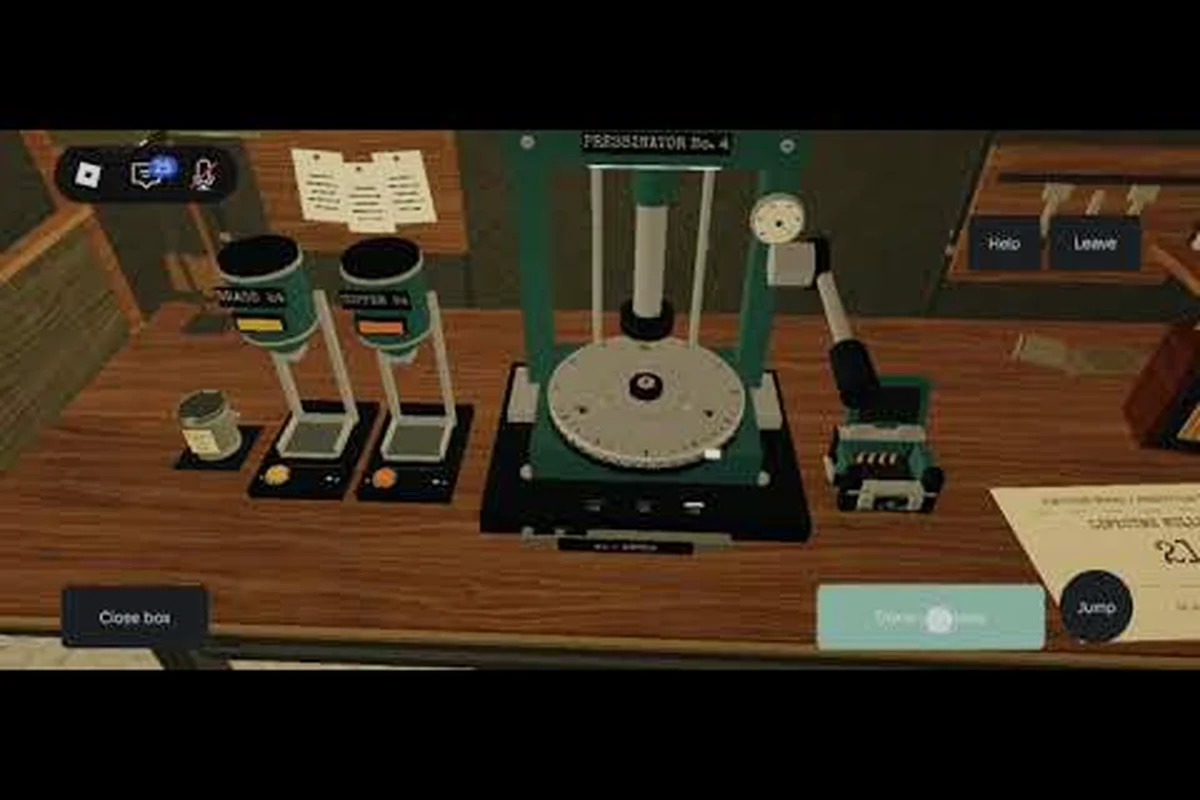
Playing BRASS HELL with friends works best when everyone has a clear job, communicates before upgrades, and shares resources instead of competing for attention. The BRASS HELL best way to play with friends is to build a small, coordinated team that turns workshop tasks into a shared production line.
Agree on the Work Split Before the First Order
The first step in any BRASS HELL multiplayer session is deciding how the group will divide the work. One player can focus on gathering materials, another can manage machines, and the remaining player can handle customers, repairs, or upgrades. This approach keeps everyone involved without forcing the group to interrupt the same task constantly.
The important point is not to assign permanent roles too quickly. Early shifts often require everyone to contribute wherever an urgent task appears, while later shifts benefit from specialization. A flexible arrangement helps the team respond to changing demands without leaving one station unattended.
| Group size | Recommended approach | Main advantage |
|---|---|---|
| Two players | Split gathering and workshop duties | Low coordination overhead |
| Three players | Use one flexible floater role | Covers repairs and urgent orders |
| Four players | Assign two workshop workers, one supplier, and one customer lead | Minimizes task overlap |
| Larger groups | Divide production, logistics, and customer management | Prevents bottlenecks |
A compact checklist can make the session easier to run by turning coordination into quick, visible decisions rather than constant interruptions. For example, a three-player team can designate one flexible floater for urgent orders, machine repairs, and material deliveries while the other two manage the workshop and incoming orders. For four players, dividing production, logistics, and customer management reduces bottlenecks because each player can act without repeatedly checking who has already handled the same task. Keeping these roles lightweight and tied to the current shift lets the group adapt when a customer request or machine failure requires someone to switch stations.
-
Shared goal: Agree on the immediate target before starting the shift.
-
Resource ownership: Decide who gathers, processes, delivers, and installs materials.
-
Priority rule: Resolve emergencies in the same order every time.
-
Upgrade pause: Announce planned changes before moving or modifying equipment.
-
Rotation plan: Swap demanding jobs periodically so one player does not fall behind.
The four-player guide provides additional ways to structure a larger team. For smaller parties, the key is to establish a simple rhythm: one player announces the next priority, another confirms what is available, and the rest act without waiting for long explanations.
Talk in Concrete Facts About the Factory
Communication is most useful when it describes visible game information. Statements such as “the machine is full” or “we need more steel” are easier to act on than broad judgments such as “we are behind.” Players can then finish the current action, correct the bottleneck, and continue without interrupting one another.
BRASS HELL friends co-op tips work best when each message answers one of three practical questions: what needs attention, who can handle it, and what should everyone else avoid doing. This prevents duplicate labor, such as two players delivering the same material while another machine remains empty.
| Communication moment | Useful message | Why it helps |
|---|---|---|
| New order arrives | “I will handle the new customer.” | Prevents duplicate service |
| Material runs low | “I am gathering the next batch.” | Separates supply from processing |
| Machine needs repair | “I can repair it; finish your current task.” | Keeps responsibility clear |
| Upgrade begins | “Moving the workshop now; pause delivery.” | Prevents wasted trips |
| Shift changes | “Recheck priorities and redistribute tasks.” | Prevents early habits from carrying over |
Voice communication is convenient, but a shared chat channel works just as well when the group cannot talk. Keep messages short, use player names, and avoid sending corrections during a critical chain of actions. Players have also reported that naming finished tasks clearly makes it easier for the team to maintain momentum during busy shifts.
The strongest teams use priority by urgency. Immediate customer problems come first, followed by machines that are about to stall, then routine production, and finally optional upgrades when the workshop is stable. This hierarchy prevents an exciting upgrade from delaying a task that affects the entire shift.
BRASS HELL Co-op Guide to Task Division
Task division works best when each player owns an outcome rather than a machine alone. One person may be responsible for keeping raw materials available, another for maintaining active equipment, and another for satisfying customers. The outcome remains clear even when the underlying steps change.
For example, the supplier does not need to announce every trip to the storage area. They only need to warn the team when a material count is about to change. Similarly, the workshop specialist can focus on production while another player handles repair requests. This creates a chain of responsibility without excessive micromanagement.
| Player role | Primary responsibility | Secondary responsibility | Watch for |
|---|---|---|---|
| Supplier | Gather and deliver materials | Keep storage organized | Low reserves |
| Production lead | Keep machines active | Balance output types | Finished-goods backups |
| Customer lead | Serve orders quickly | Prioritize difficult jobs | Overlapping service |
| Maintenance lead | Repair and upgrade equipment | Prevent future failures | Workbench conflicts |
| Floater | Cover gaps and emergencies | Carry materials | Unclear handoffs |
A useful exercise is to play briefly without perfect coordination. Notice which task is repeatedly interrupted and which resource causes the most walking. That observation identifies the best candidate for a dedicated role. If machines frequently stall because ingredients arrive late, prioritize a supplier. If customers wait while production continues, move someone toward order handling instead.
Players should avoid assigning tasks based only on personal preference. Ask which jobs each person can complete accurately, then choose the division that protects the overall workflow. The team-play overview explores related ways to divide responsibilities without creating rigid roles.
BRASS HELL Co-op Timing and Upgrade Decisions
Upgrades are tempting because they improve the workshop, but they can interrupt production if started at the wrong moment. The best BRASS HELL co-op strategy is to time major changes around natural workflow boundaries. Finish an active production chain, clear nearby materials, confirm that nobody needs the affected machine, and then begin the upgrade.
For smaller groups, upgrades should happen only when the player performing them can step away without leaving a critical task unattended. In a four-player session, one player can continue serving customers, another can gather materials, and two can complete the upgrade. For two-player teams, the upgrade should follow a brief production checkpoint rather than occur during an urgent order.
| Upgrade timing | Risk level | Recommended approach |
|---|---|---|
| During an active customer order | High | Delay until the order is resolved |
| While a machine is processing | Medium | Wait for the current batch |
| After a stable production cycle | Low | Gather materials and upgrade together |
| When several orders are queued | High | Assign a customer lead first |
| During cleanup and reorganization | Low | Use this window for workshop changes |
The same logic applies to movement and layout changes. Moving a machine while another player is bringing in materials may waste the trip and delay production. Before rearranging the workshop, announce the intended change, confirm the route, and finish active deliveries when possible.
A quiet production window is a better upgrade trigger than an arbitrary timer. Players can identify one by watching for completed orders, stable machine output, and enough stock to absorb a short interruption. This method is less rigid than assigning every change to a specific minute and works well when the shift changes in real time.
BRASS HELL Co-op Tips for Different Party Sizes
The best setup changes with the number of players. A duo must combine many jobs, while a larger group can divide a task into smaller pieces. More players do not automatically create more efficiency because communication and movement also become part of the workload.
With two players, use a simple alternation model. One gathers and processes while the other handles customers and machine upkeep, then switch after a stable cycle. The important rule is that neither player should abandon an urgent task without telling the other. The cooperative guide offers additional approaches for smaller parties.
| Party size | Best operating rhythm | Main risk |
|---|---|---|
| Two players | Alternate broad roles at checkpoints | One player becomes overloaded |
| Three players | Keep one flexible floater | The floater becomes a bottleneck |
| Four players | Use specialized roles with clear handoffs | Players duplicate work |
| Five or more | Create small work cells | Communication delays grow |
For three players, keep two workers on a stable production line and let the third handle movement, repairs, and urgent orders. For four or more, assign work cells based on location when possible. Nearby players can share one cluster of machines, reducing travel while preserving ownership of tasks.
The share-the-factory guide focuses on group-play considerations that become more important as the roster grows. A shared workshop works when players can see where finished materials belong and where unfinished resources should return, because unclear storage rules create more walking than the actual job requires.
A Practical BRASS HELL Multiplayer Session Plan
A repeatable session plan prevents the group from spending every shift rediscovering priorities. Start with five minutes of setup, use a short production plan, and reserve a checkpoint for reassignment. This structure is simple enough for a first session and flexible enough for a difficult run.
Before the Shift
Before starting a co-op shift in BRASS HELL, agree on the shift objective, assign players to specific machines, and review who is responsible for supplies. Check the machine condition panel and prioritize repairs on equipment that threatens production; one neglected machine can slow the entire team. For example, route oil and coal to the worker responsible for the most active machine instead of spreading resources randomly, and designate a storage area for finished goods so players do not spend the shift searching for items that should already be ready for pickup.
During Production
Use the team’s shared priority order: customers first, active machines second, routine gathering third, and optional improvements last. Assign an owner whenever a player leaves a station or begins a multi-step task. For example, if one player is handling a machine while another leaves to gather resources, the machine owner should finish the current interaction, record its status, and explicitly hand over any remaining steps before switching stations. This prevents duplicated actions and lost progress, which is especially important when multiple players are operating machines, gathering materials, or completing multi-step production tasks together.
Before an Upgrade
Finish the active batch, check the material supply, and clear the work area before triggering an Upgrade. The player operating the workshop should call out every movement so teammates can safely reposition machines and avoid blocking a workstation; another player should cover the temporarily abandoned task. In practice, this means pausing to synchronize around the current production line, checking whether the next Brass resource is available, and preventing an Upgrade from leaving a machine idle or a teammate stranded in an unsafe area.
Near the End
Assign cleanup, final deliveries, and preparation for the next shift as a coordinated handoff rather than leaving everything to the carrier. For example, one player can deliver the last batch while another sorts materials and checks the next production queue; if the carrier is overloaded, transfer a specific task such as loading or unloading instead of waiting for them to finish alone. This keeps BRASS HELL co-op from losing time to avoidable bottlenecks.
| Session phase | Team action | Result |
|---|---|---|
| Setup | Assign responsibilities and check priorities | Clear starting roles |
| Early production | Test the division and fix bottlenecks | Stable workflow |
| Mid-shift | Reassign only when a clear gap appears | Less task overlap |
| Upgrade window | Coordinate coverage before moving equipment | Fewer wasted trips |
| Shift close | Finish deliveries and organize materials | Easier next round |
This session plan makes BRASS HELL co-op tips practical because it focuses on decisions rather than generic encouragement. A successful group does not avoid mistakes; it notices them quickly and adjusts before one small delay becomes a chain reaction.
Improve Teamwork Without Micromanaging
Good co-op communication in BRASS HELL should be concise, relevant, and tied to production bottlenecks rather than narrating every click or basic movement. For example, after a player finishes a machine order, they should confirm the output before teammates redirect resources or change the work order. Report urgent shortages immediately, but avoid flooding the chat with routine updates once the group already understands the standard production rhythm. This keeps BRASS HELL friends co-op sessions coordinated without turning the team into constant micromanagement.
Use three levels of coordination in BRASS HELL multiplayer: confirm completed production, announce changes that affect the shared order queue, and flag emergencies that threaten a machine or customer. For example, when a player redirects the flow of steel from a belt to a nearby press, they should name the machine and the reason so teammates can prevent duplicated hauling. If the press stops mid-production, an immediate repair request matters more than a detailed diagnosis, since every lost production cycle can delay the current work order. This layered approach keeps BRASS HELL friends co-op teams aligned without excessive micromanagement.
-
Routine confirmation: A brief acknowledgment when a task is finished.
-
Priority change: A clear announcement when someone changes the work order.
-
Emergency warning: An immediate message when a machine, material supply, or customer requires intervention.
| Situation | Communication level | Example |
|---|---|---|
| Routine delivery | Confirmation | “Steel delivered.” |
| Role change | Priority update | “I am taking the next customer.” |
| Machine failure | Emergency warning | “Press stopped; repair needed.” |
| Workshop movement | Preparation | “I am moving the press now.” |
Avoid assigning blame during busy production moments, because a steel shortage or halted press can quickly affect the shared order queue. State the current condition and request the next action instead: “The press needs material” tells the BRASS HELL co-op team what to solve, while “someone forgot steel” creates unnecessary friction. For example, if the press has stopped during a complex order, the fastest response is for another player to deliver steel while the machine operator handles the repair. This keeps BRASS HELL multiplayer focused on recovering production rather than debating whose mistake caused the delay.
When a player makes a mistake in BRASS HELL, treat the incident as feedback about the production flow instead of starting a blame discussion. For example, if a press stalls because the steel belt was misaligned, the fastest recovery is for another teammate to restore the material route while the press operator restarts the machine and checks the current work order. If the mistake changes who handles the next customer, announce the corrected assignment immediately so the shared order queue does not lose time. This keeps BRASS HELL friends co-op sessions focused on recovering output, while BRASS HELL co-op communication preserves trust and prevents one delay from turning into a broader resource shortage.
Frequently Asked Questions
How many players can BRASS HELL multiplayer support?
BRASS HELL multiplayer supports a four-player co-op mode, while single-player remains available for solo play. Four players can divide production, supply, customer handling, and maintenance into specialized roles. Smaller parties should use a flexible arrangement because each person must cover more than one task.
What is the best way to organize workshop jobs with friends?
Assign each player a clear outcome, such as supplying materials, maintaining machines, or serving customers, then establish a shared priority order. Begin with urgent customer and machine problems before optional upgrades. Reassign only when a visible bottleneck appears instead of changing roles constantly.
Should friends upgrade machines at the same time in BRASS HELL co-op?
Only upgrade together when the group can maintain production while the upgrade occurs. Finish active orders and production batches first, gather the required materials, and clear the work area. In smaller groups, time upgrades around stable checkpoints to avoid leaving another player without support.
Is BRASS HELL co-op easier than playing alone?
Co-op can make difficult jobs more manageable because players can divide labor and cover each other’s tasks. It also introduces communication delays and shared decision-making, so the team may not always complete more work than a focused solo player. Success depends on clear responsibilities and timely handoffs rather than player count alone.
How do friends avoid duplicating tasks in BRASS HELL co-op tips?
Announce ownership before starting jobs, use specific messages, and confirm when a task is complete. Keep one player flexible when the party is small, but in larger groups assign clear specialties. If two players keep targeting the same machine or customer, revise the priority list during the next natural checkpoint.