
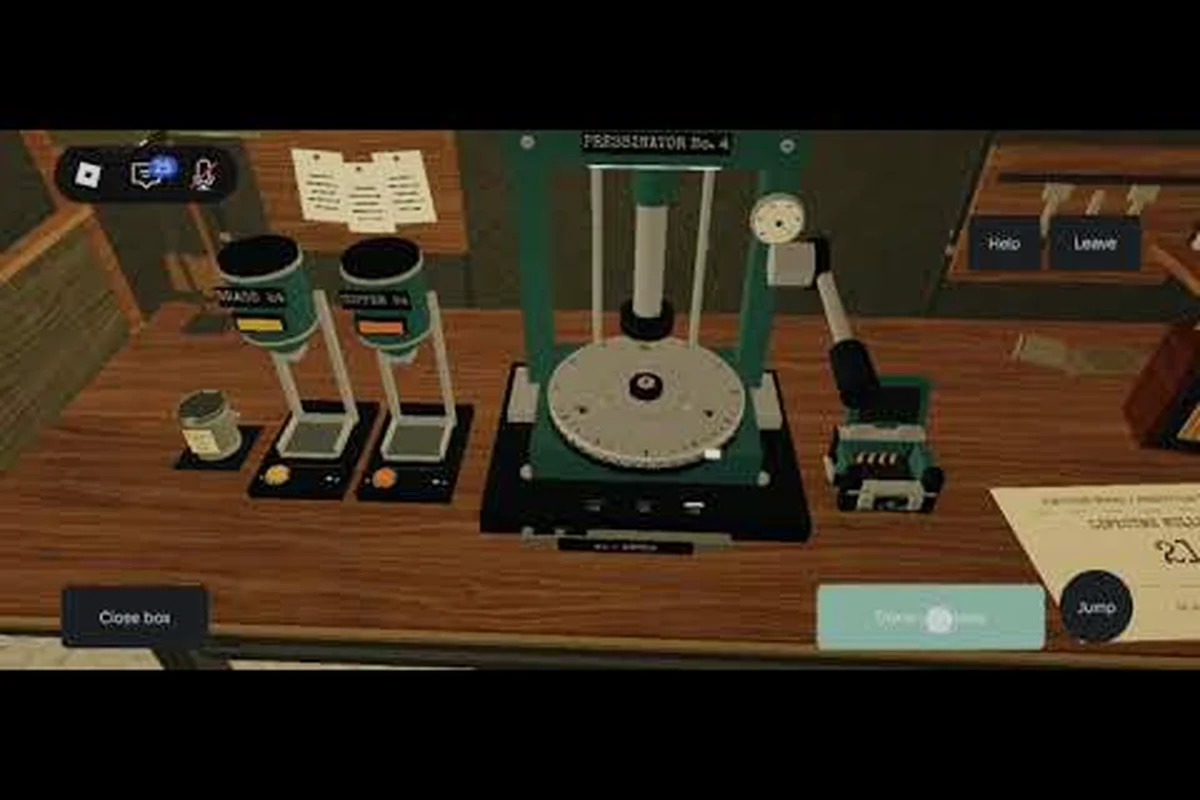
In BRASS HELL, sharing the factory turns production into a coordinated four-player operation where each teammate can specialize in production, hauling, resource processing, or logistics. Assigning one player to watch specific workstations prevents duplicated jobs, while regular bottleneck checks keep belts, assembly benches, and storage areas from becoming jammed. For example, if one player handles all hauling, delays can cascade across the whole production chain; splitting hauling from machine operation allows the factory to keep running with less crowding and fewer interruptions.
BRASS HELL Share the Factory: Build the Four-Player Team
In BRASS HELL, the best factory-sharing setup gives each player one primary workstation and one flexible backup task, then assigns short callouts to prevent two workers from handling the same press, crate, or material stack. For example, the press operator should announce when a cycle is ready while the material carrier fetches the next input; that handoff keeps production moving without teammates converging on one station. The backup role matters because a temporary bottleneck can shift from the press to packaging or delivery, and a clear trigger lets the four-player rotation cover that gap before inventory piles up.
A strong four-player rotation works best when each player owns one production station, one fallback station, and a precise communication trigger. For example, the press operator should call out when a cycle is ready, allowing the material carrier to fetch the next input without interrupting the press. The material carrier should announce incoming stacks, while the inventory handler clears nearby storage; if orders begin to accumulate, the packaging and delivery player should prioritize staging completed goods instead of waiting for a production lull. This structure keeps BRASS HELL’s factory workflow fluid by matching the right task to the current bottleneck rather than leaving one player responsible for everything.
| Player | Main responsibility | Backup responsibility | Communication trigger |
|---|---|---|---|
| Player 1 | Run and monitor the press | Fetch finished output | Call out when the press needs attention |
| Player 2 | Supply raw materials | Clear nearby storage | Announce incoming material stacks |
| Player 3 | Move crates and sort inventory | Prepare delivery staging | Warn when routes become blocked |
| Player 4 | Package and deliver orders | Help with urgent output | Confirm pickup and delivery status |
This arrangement is more useful than assigning one player to “do everything” because production bottlenecks often move. If the press waits for material, the material carrier becomes critical; if orders accumulate, the delivery player must keep moving them instead of waiting for a pause.
Set Roles Before the Line Gets Busy
Before starting the first production cycle, agree on a short list of priorities. The group should decide which machines matter most, where finished products belong, and who handles interruptions. Players should also establish simple callouts, such as “material ready,” “crate clear,” or “delivery waiting.”
The four-player co-op guide provides a useful framework for organizing sessions with friends. Its role-based approach complements BRASS HELL share the factory planning because it gives every teammate a predictable first action rather than making everyone improvise around the same machine.
Communication matters most when two tasks overlap. For example, the press operator may need raw material while the crate mover is clearing a delivery point. A quick status call prevents both players from occupying the same narrow workspace or delaying a completed batch.
BRASS HELL Multiplayer Tips for Four-Player Coordination
Smooth multiplayer depends on reducing idle time. A player who finishes a task should immediately check for the next bottleneck instead of waiting for an exact assignment. In a four-player factory, material starvation, crowded crate points, and unfinished deliveries usually require faster responses than adding another production order.
Use these BRASS HELL multiplayer tips to keep the team aligned: divide the four-player factory into press support, crate handling, and delivery roles, then reassign that coverage as bottlenecks shift. For example, if the press is waiting for a batch, the material player should prioritize the next input while the crate player clears finished goods; if storage begins stacking up, move the delivery player to the oldest ready batch. This keeps every production handoff synchronized and prevents one person’s finished task from creating idle time elsewhere in the factory.
-
Keep the press lane open so finished goods can leave without crossing material routes.
-
Stage raw materials near the press without blocking the machine operator.
-
Separate input and output crates whenever the available floor space allows it.
-
Deliver completed batches promptly so finished products do not obstruct later production.
-
Announce priority changes when an urgent request alters the normal workflow.
-
Avoid unnecessary idling by assigning a clear backup responsibility.
| Group situation | Better response | Result |
|---|---|---|
| The press is empty | Material player delivers the next batch | Press time stays productive |
| Finished goods accumulate | Crate player clears the output area | New orders can begin |
| Deliveries stack up | Delivery player handles the oldest ready batch | Storage pressure drops |
| Two players finish together | Both check separate bottlenecks | Less waiting around the press |
| A task becomes confusing | The nearest responsible player takes it | Decisions happen faster |
The press-side priority and delivery-side priority should never be confused. One player can produce an item, but the factory only advances when that item is packaged, moved, and delivered. Treat every handoff as part of the production chain rather than as a separate chore.
Use Simple Status Calls
Short, consistent callouts are more effective than long explanations during a rush. For example, announcing “Output full” tells the crate player to clear finished goods immediately, while “Delivery due” gives the delivery player priority over other tasks. The next teammate should confirm ownership with a brief response such as “I’ll clear it,” preventing duplicated work and keeping production moving.
| Callout | Meaning | Expected response |
|---|---|---|
| “Material ready” | Raw input is available | Press player collects it |
| “Output full” | Finished goods need removal | Crate player clears the area |
| “Delivery due” | A completed order is ready | Delivery player takes priority |
| “Route blocked” | Movement space is obstructed | Nearby player clears it |
| “Need hands” | One task exceeds the current worker | Free teammate assists |
These callouts should describe conditions, not blame. “Route blocked” gives the team an immediate fact to solve, whereas a complaint about another player adds no useful direction. A calm, factual signal also works better when the factory becomes crowded or several orders reach similar stages at once.
BRASS HELL Duo Guide: When Two Players Must Cover Everything
A two-player group needs a simpler rhythm because there are fewer workers to absorb overflow. The core duo loop should alternate between production support and logistics: one player stays near the press while the other moves materials, crates, and completed orders.
For BRASS HELL duo guide planning, divide the session into short cycles rather than assigning permanent machine ownership. Permanent roles can fail when one player is trapped in a delivery sequence while the other is left waiting at an empty press.
| Stage | Player A | Player B |
|---|---|---|
| Preparation | Gather raw materials | Clear output and organize crates |
| Production | Operate the press | Prepare delivery materials |
| Transition | Move finished output | Confirm next required inputs |
| Delivery | Handle one pickup | Keep the production line supplied |
| Recovery | Resume press work | Finish cleanup and route checks |
Two-player efficiency comes from overlapping tasks, not dividing the game into two sealed halves. If both players perform the same task at once, the team misses a bottleneck: for example, two workers feeding the press while neither clears finished output can fill storage and delay the next production cycle. If both leave the press simultaneously, production pauses entirely. In the table’s Production stage, one player operates the press while the other prepares delivery materials; during Transition, finished output moves out before the duo resumes press work, preserving a continuous production rhythm.
The team play guide adds useful ideas for dividing work in smaller sessions. Applying those ideas to BRASS HELL share the factory planning means keeping one role flexible, especially when the duo must handle both production and delivery without a dedicated crate carrier.
BRASS HELL Group Play: Build Flexible Backup Roles
Four players create more opportunities for specialization, but rigid assignments can leave one role overloaded. A better group-play structure uses a primary station, a nearby backup, and a shared list of urgent jobs. That arrangement preserves efficiency without requiring constant micromanagement.
Identify the Factory’s Real Bottlenecks
Watch the first few minutes of a session and record where players pause. Common signs include an idle press, a growing pile of finished goods, or repeated trips between distant storage areas. These observations should determine who receives the backup role.
| Bottleneck signal | Likely cause | Best backup response |
|---|---|---|
| Press repeatedly stops | Missing raw materials | Keep one extra batch near the press |
| Output area becomes crowded | Finished goods are not moved | Assign the crate player to clear it |
| Same route is crossed repeatedly | Poor staging locations | Group materials and output separately |
| Orders wait beside completed products | Packaging or delivery lag | Move delivery preparation earlier |
| Players repeatedly ask who is free | Unclear role boundaries | Use explicit status callouts |
Backup priority should depend on what blocks the next stage. Material delivery normally matters most when the press is idle, while crate removal matters most when finished output prevents the next batch from starting. Delivery work becomes urgent when completed orders occupy usable space.
Keep One Player Cross-Trained
Every player should be able to handle at least one task outside their main responsibility. In BRASS HELL group play, a long delivery chain can remove a worker from the central production area, so backup coverage matters more than simply assigning fixed roles. For example, if the press operator is handling a prolonged production run, another player should be ready to stage materials or move crates without leaving the press idle. Cross-training also helps when a delivery player is occupied: the remaining workers can identify the next required input, keep production moving, and prevent a temporary bottleneck from becoming a full factory shutdown.
A practical rotation is to let the press operator learn crate handling, the crate player learn material staging, and the delivery player cover the press during brief gaps. The fourth player can rotate through these tasks to prevent any single assignment from becoming stale.
The crafting recipes list helps players understand what each production task requires. Knowing the required inputs and outputs reduces hesitation when teammates switch jobs, because they can prepare the correct materials without waiting for a demonstration.
BRASS HELL Server Size and Player Count Planning
The supplied game data does not include an authoritative server-size value, so the exact BRASS HELL max players and BRASS HELL server size should not be treated as confirmed facts without checking the current official listings or live client. This guide therefore plans around the four-player target specified for the co-op scenario rather than claiming that four is the absolute maximum.
This distinction matters because BRASS HELL how many players questions often confuse recommended team composition with a verified technical ceiling. Four players provide a balanced workload, but players should verify current lobby and server information before organizing a larger group.
| Planning question | Reliable approach |
|---|---|
| How many players should join this guide’s session? | Use four as the recommended balanced team size |
| What is the BRASS HELL max players for the current build? | Confirm it in the live lobby or official listing |
| Can a duo use the same plan? | Yes, combine material and crate duties |
| Can five or more players join? | Verify current server capacity first |
| Should everyone use voice chat? | It simplifies status calls, but visual callouts can work too |
If your group has more than four members, split into two teams or reserve one server slot for a replacement. Trying to make one extra player useful usually creates another coordination layer unless the game provides a clearly supported larger-server workflow.
Match Player Count to the Factory Workload
Four players is the strongest target for this particular plan because each major production responsibility has a natural owner. Three players can work well when crate movement and delivery are grouped together. Two players remain viable, although they must alternate more frequently between the factory center and delivery routes.
| Player count | Main advantage | Main challenge | Best assignment |
|---|---|---|---|
| Two players | Easy communication and coordination | Both logistics and production fall to two people | Alternate press support with movement duties |
| Three players | Strong coverage with low overlap | One role must combine crate handling and delivery | Press, materials, and combined movement role |
| Four players | Every major task has a clear owner | Backups must stay disciplined | Press, materials, crates, and delivery |
| More than four | Extra help during demanding requests | Potential crowding and unclear priority | Confirm capacity or divide into smaller teams |
A larger team is not automatically more productive. Extra bodies can increase traffic around the press, create duplicated deliveries, and make status communication harder. For BRASS HELL share the factory sessions, begin with four players and add another teammate only when the current team has a clear, repeated bottleneck.
BRASS HELL Multiplayer Tips for Cleaner Sessions
Efficient sessions depend on preparation and visible work areas. Players should know what is ready, what is needed, and where finished output should go. The same rule applies to materials: group similar inputs near the correct machine and remove products promptly once they no longer serve a production task.
When sharing the factory in BRASS HELL, treat each work area as a live production chain rather than a collection of independent stations: assign one teammate to feed presses and machines, another to move finished goods, and keep the third responsible for sorting incoming material. For example, if one player is handling the press while another collects completed orders, the factory runs more smoothly because both sides can work without repeatedly crossing the same route. Clear communication about press status and material flow prevents idle machines and unnecessary walking, which matters most during a duo session where each player must cover multiple production steps.
-
Set a landing zone for materials that are ready to be processed.
-
Use a separate pickup point for completed orders waiting for delivery.
-
Clear the press route first when moving bulky finished goods.
-
Batch similar movements when several crates travel in the same direction.
-
Pause production only when necessary, especially when the next material step is predictable.
-
Rotate demanding jobs so one teammate does not carry every delivery.
-
Keep callouts task-based, so everyone understands what needs to happen next.
Run a Three-Minute Factory Audit
At the beginning of a session, assign one minute to inspect the active production area, one minute to arrange materials, and one minute to verify the delivery route. This brief audit can expose misplaced crates, blocked paths, or an empty output zone before the group commits to a demanding order.
| Audit area | What to check | Corrective action |
|---|---|---|
| Press approach | Clear access and required input | Move obstructions and stage material |
| Crate point | Enough empty space for output | Finish or relocate pending crates |
| Delivery route | Continuous travel space | Clear the main path first |
| Team positions | No more than one dedicated worker per station | Redirect an idle or overlapping player |
| Priority list | Everyone knows the next goal | Name the first task and backup |
The three-minute audit is valuable because small layout problems often become larger delays when orders begin arriving faster. For example, an obstructed press approach can interrupt the production cycle, while a congested crate point may prevent finished goods from leaving the factory. Assigning the audit to new players also creates a clear contribution: they can report blocked paths, confirm that materials are staged correctly, and verify that the delivery route remains continuous without needing advanced knowledge of every production route.
BRASS HELL Share the Factory: Run a Complete Co-op Cycle
A complete cycle exposes whether the role plan works. Start by naming the first production goal, then assign each worker a starting action. The press player begins processing, the material player supplies the next batch, the crate player prepares the output area, and the delivery player checks the route and required order.
Coordinate the Handoffs
Each handoff should answer three questions: what is finished, where it is going, and who owns the next action. The press player does not need to announce every product, but a clear indication that a batch is complete lets the crate player begin moving before the next press cycle finishes.
| Transition | Sender | Receiver | Best signal |
|---|---|---|---|
| Raw input to press | Material player | Press player | “Material ready” |
| Press to crate point | Press player | Crate player | “Output ready” |
| Crate point to delivery | Crate player | Delivery player | “Order staged” |
| Delivery completion | Delivery player | Whole team | “Delivery clear” |
| Unexpected pause | Any player | Nearest free player | “Need hands” |
The handoff sequence is more valuable than the speed of any individual movement. A fast worker who finishes early still helps the team when they immediately take the next empty station. Conversely, repeated backtracking indicates that a staging rule needs revision.
Review the Cycle Afterward
After completing a batch, spend a moment comparing the planned roles with the actual work. If the material player was constantly interrupted, add a backup route. If the crate point filled up, finish deliveries earlier. If the press waited too long, keep one prepared input batch closer.
This review turns BRASS HELL share the factory from a static checklist into a repeatable production system. The best way to play with friends guide provides additional ways to structure cooperative sessions, while this cycle gives each team a concrete way to evaluate its own workflow.
BRASS HELL Multiplayer Communication Checklist
A team can have the best roles and still lose time if players disagree about priorities. Establish a shared decision rule before the factory becomes crowded: urgent deliveries take precedence over routine movement, blocked routes receive immediate cleanup, and unfinished press cycles should not be abandoned for a lower-priority task.
Before starting, confirm the following: agree on a single production target, assign one player to monitor competing requests, and keep the delivery route clear. For example, if one player is heading to collect a delivery while another finishes a press cycle, the priority owner should call the action that prevents a machine from sitting idle or blocking a route. This prevents duplicated movement and keeps the four-player factory running smoothly without requiring constant supervision.
- Every player knows their primary station.
- Every player knows one backup task.
- The material and output areas are separated.
- The delivery route is clear.
- Everyone agrees on the first production target.
- Each player knows the agreed status callouts.
- One player monitors priorities when several requests overlap.
The priority owner does not need to control every movement. Their role is to notice conflicts, such as a completed delivery competing with an empty press, and choose the action that unlocks the most work. This becomes increasingly important as the team grows beyond the balanced four-player arrangement.
Frequently Asked Questions
Can BRASS HELL be played with four players?
This plan uses four players as its recommended team size because press operation, materials, crate movement, and delivery can each have a clear owner. Confirm the current live lobby or official listing for verified capacity, since the supplied game data does not establish an absolute technical player ceiling.
What is the best role for a duo?
The most effective duo arrangement keeps one player near production while the other alternates between materials, crate movement, and delivery. Both players should switch stations whenever one becomes the only bottleneck, rather than maintaining rigid duties that leave the press waiting.
How should players divide BRASS HELL share the factory tasks?
Assign one player each to the press, material staging, crate handling, and delivery in a four-player session. Give everyone one backup responsibility, use clear status callouts, and have the team move the person who can unlock the largest bottleneck instead of following the original plan rigidly.
Does a larger group always work better?
No, because additional players can crowd routes, duplicate deliveries, and obscure ownership. Verify the current server size first, and consider dividing a large group into smaller teams when the four-player arrangement already keeps the press supplied and storage clear.
Which BRASS HELL multiplayer tips reduce the most waiting?
The most effective techniques are to separate input and output areas, keep the press approach clear, stage materials before they are needed, announce completed batches, and assign backup tasks. These habits reduce idle time without requiring players to memorize complex production routes.