
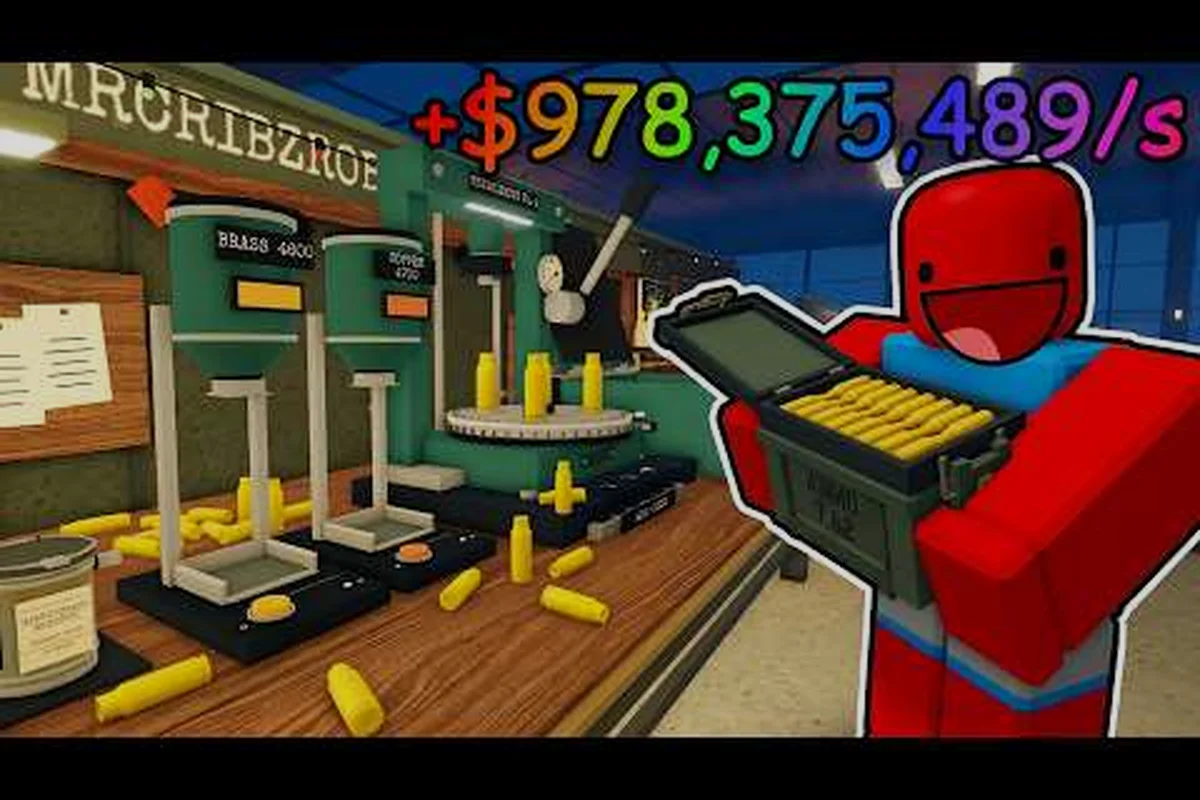
A reliable BRASS HELL crafting guide makes every round count: learn the press, prepare the right materials, and pack finished crates without wasting supplies. The core production loop depends on precise material handling, so track each batch of brass, gunpowder, and other components before placing them into the press; a wrong quantity can waste scarce resources and interrupt the round. Once rounds emerge, inspect them carefully and sort usable ammunition from defective pieces before filling crates, since efficient packing preserves valuable output for later contracts and reduces the temptation to overproduce.
Turn Raw Materials Into Ammunition Through the Chain
BRASS HELL crafting turns raw materials into ammunition, but the production chain is only useful when each stage works as intended. You need to understand what the press accepts, how to convert components into rounds, and how to transfer those rounds into crates. Mistakes at any point can slow down later jobs or leave valuable material unprocessed.
This BRASS HELL crafting guide follows the workflow from preparation to finished packaging. The order matters because material selection affects press operation, press output affects crate capacity, and efficient packing determines how much useful ammunition reaches the next stage of production.
Treat the BRASS HELL process as three linked checks rather than one continuous action: first confirm that the raw inputs and required components are available and usable, then verify that the press is loaded with an acceptable batch and completes without a fault, and finally inspect the crate transfer so the finished rounds are counted and stored correctly. For example, a press cycle that appears complete but leaves some ammunition unprocessed can reduce the output available for the crate stage; catching that mismatch before packing helps prevent a short or inaccurately filled crate from carrying the problem into later production.
-
Material check: Confirm that the required inputs are present and in usable condition.
-
Press check: Load only what the machine can accept, then watch for completion or a fault.
-
Crate check: Move the finished rounds into the correct container and verify the final count.
Before moving deeper into the process, it helps to understand the broader crafting-system overview. That foundation can clarify where materials enter the production chain and why an apparently simple loading mistake affects every later step.
The Production Chain at a Glance
| Stage | Primary action | Main concern | Result |
|---|---|---|---|
| Gather | Collect the required crafting inputs | Missing or incorrect materials | Production can begin |
| Prepare | Arrange inputs in the proper order | Confusing similar components | Correct material enters the press |
| Press | Load and operate the machine | Incorrect loading or missed completion | Formed ammunition appears |
| Inspect | Check the finished rounds | Defective or leftover output | Usable rounds become available |
| Pack | Place rounds into crates | Lost capacity or wrong placement | Finished crates are ready for use |
What This BRASS HELL How to Craft Process Optimizes
A clear process improves more than speed. It reduces the need to repeat work, keeps inventory organized, and makes it easier to diagnose a failed batch. That advantage becomes more valuable as production demands rise and several jobs may compete for the same materials, press time, and storage.
Preparing Materials for the BRASS HELL Press
The press is the central machine in BRASS HELL ammunition production, but it cannot compensate for an incorrect input order. Before switching it on, compare the required materials with everything currently available. This prevents a batch from starting with the wrong component and saves time that would otherwise be spent restarting or discarding the result.
A reliable BRASS HELL press guide should focus on preparation before operation. Players who rush to load every available item often discover that an excess material cannot be processed at the correct stage. A deliberate inventory check is the safest way to preserve resources and keep the workflow predictable.
Material Preparation Checklist
-
Required inputs: Gather every component needed for the current ammunition type.
-
Matching ammunition type: Confirm that the inputs correspond to the recipe being produced rather than a nearby variant.
-
Clean workspace: Move unrelated items away so the intended inputs remain visible beside the press.
-
Capacity check: Make sure there is enough output space for the completed batch.
-
Route planning: Decide where finished rounds will go before opening the loading step.
The crafting recipes overview is useful for comparing ingredient combinations and confirming which BRASS HELL press recipe matches the ammunition type in your inventory. For example, compare the listed casing, propellant, and projectile requirements side by side before producing a batch; this prevents a near-match from consuming materials intended for another round. Once the recipe is confirmed, plan the required quantity around your crate capacity so the BRASS HELL press output can be transferred directly into packing without overfilling the storage area.
Compare Common Preparation States
| Preparation state | What it means | Best response |
|---|---|---|
| All inputs ready | Every required component is available | Begin the production order |
| One component missing | The batch cannot be completed correctly | Gather the missing item first |
| Extra components present | Unrelated materials are near the press | Set them aside before loading |
| Output space limited | A full batch may not fit | Empty storage or change the batch size |
| Materials uncertain | Similar items cannot be distinguished | Compare them against the recipe before continuing |
Reduce Ambiguity at the Machine
Place the materials in a consistent arrangement whenever the game allows it. Keep the component used first closest to the loading point, followed by those added later. This visual order helps when operating under pressure because it reduces backtracking and makes the intended recipe easier to recognize at a glance.
Do not assume that nearby objects belong to the same recipe. Their presence does not change what the current job requires. If several ammunition types share materials, confirm the intended output before pressing the control; changing the job after loading may waste part of the batch.
Watch the Sequence and Feedback When Loading
Loading the press requires attention to both sequence and feedback. The correct material must enter at the right time, and the machine’s status should be monitored after activation. A BRASS HELL how to use the press approach treats the machine as a process with observable stages rather than a single button press.
The key distinction is between loading and producing. Loading places the required materials into the machine, while production continues until the output appears. Players who leave immediately after activating the press may miss a completion signal or interrupt a later step. Stay at the station until the batch reaches a clear finished state.
Press Operation Sequence
| Step | Action | Why it matters |
|---|---|---|
| 1 | Select the intended ammunition recipe | Prevents an accidental output |
| 2 | Confirm the required materials | Ensures the batch can be completed |
| 3 | Load the components in order | Gives the press a valid input sequence |
| 4 | Activate the machine | Starts the conversion process |
| 5 | Watch the status indicator | Confirms whether production continues normally |
| 6 | Collect the completed rounds | Moves output into inventory |
| 7 | Inspect for leftovers | Identifies unused or failed materials |
Recognizing Normal and Problem States
| Machine state | Likely meaning | Action |
|---|---|---|
| Ready for material | The press is waiting for the next input | Load the appropriate component |
| Active cycle | Materials are being converted | Wait for completion |
| Output ready | The batch has finished | Collect the rounds |
| Input obstructed | The current material cannot proceed | Check the load and remove any conflict |
| Partial batch | Only part of the job was completed | Inspect the remaining inputs before retrying |
| No output after activation | The recipe or loading order was invalid | Review the recipe and restart carefully |
Common Press Mistakes
Loading every nearby material can create confusion because unrelated objects may enter the sequence. For each BRASS HELL press recipe, gather only the listed inputs—such as the required rounds, ammunition components, and crate materials—and compare their counts against the recipe before activating the press. A single misplaced component can interrupt production, while collecting materials in advance reduces interruptions when switching between jobs.
Operating from memory is risky when several BRASS HELL press recipes use similar ammunition components, since confusing one component sequence with another can corrupt the batch. Reopen the recipe and compare each required round, ammunition component, and crate material before activating the press. For example, if two recipes share the same casing but require different bullet counts, verify the quantity against the specific recipe entry before starting; this prevents wasted components and avoids interrupting the longer production session.
Leaving the press unattended may cost progress if another production step requires your attention. The safest method for learning BRASS HELL how to make rounds is to complete the entire cycle manually at first, then repeat it under more demanding conditions.
Ignoring partial output can lead to accidental duplication when the BRASS HELL press finishes only part of a recipe batch. Before starting another batch, collect every produced round or component, confirm that the press output area is empty, and compare the recovered quantity with the recipe’s required count. For example, if a recipe calls for ten rounds and only six emerge from one cycle, retain those six instead of rerunning the full batch; otherwise, the remaining four may be manufactured twice and distort the ammunition count needed for the next crate-packing step.
BRASS HELL How to Make Rounds and Collect the Output
Producing rounds involves more than watching a progress bar. You must collect the finished ammunition, distinguish it from unused materials, and make sure it reaches your inventory before packing begins. This BRASS HELL how to make rounds workflow keeps the output visible and prevents a successful press cycle from becoming an incomplete job.
The most reliable routine is to finish one press cycle completely before beginning the next. That habit makes missing output easier to spot because every completed batch has the same endpoint: output collected, materials checked, and the press returned to a ready state.
Output Collection Checklist
-
Wait for completion: Do not collect while the press is still cycling.
-
Collect every visible round: Check the entire output area rather than taking one item.
-
Review the inventory count: Compare the new total with your expectation for the batch.
-
Separate leftovers: Keep unused materials available for later recipes.
-
Protect the output: Place rounds directly into the next stage of processing.
Use the hand-crafting production guide to clarify the BRASS HELL press mechanics, including the required materials, recipe progression, and ammunition-output rules. Treat the press as the operational layer for converting those inputs into usable rounds, then cross-reference the resulting ammunition with the relevant BRASS HELL recipe before moving it into the next processing stage or crate; this avoids producing rounds that are mechanically valid but wrong for the intended loadout.
Track Production in Simple Batches
| Batch condition | Recommended response | Reason |
|---|---|---|
| Small, controlled batch | Use while learning the machine | Makes mistakes easy to identify |
| Full materials available | Produce the complete batch | Uses available inputs efficiently |
| Output storage nearly full | Finish a smaller batch first | Prevents completion delays |
| Several job types are active | Complete and clear one at a time | Reduces recipe confusion |
| Material supply is limited | Prioritize the most useful output | Conserves scarce components |
Spotting a Failed Batch
A failed batch may leave the press inactive, the materials unused, or the output count below what the recipe should provide. Stop and inspect rather than immediately activating the machine again. Repeated attempts without changing the setup often produce the same result.
Compare four points: the selected recipe, the material order, the load area, and the expected output. Is one component missing? Was the final material added too late? Did an unrelated object block the process? These questions isolate the cause without requiring guesswork.
Packing and Filling Crates Efficiently
Finished rounds must be transferred into crates before they can serve the next stage of production. Correct packing protects the ammunition, reduces wasted space, and creates a clear final count. A strong BRASS HELL how to pack crates process treats each crate as a container with a specific role rather than a generic inventory slot.
The main mistake is assuming that any available container works equally well. Container type, required ammunition, and remaining space can affect what should be placed inside. Confirm the crate’s purpose, then move compatible rounds into it until the intended quantity is reached.
Container Selection
| Container state | Suitable action | Caution |
|---|---|---|
| Empty and correct type | Begin filling it with compatible rounds | Keep the contents uniform |
| Partly filled | Continue from its current count | Recalculate remaining space |
| Fully packed | Select another compatible crate | Do not force excess rounds inside |
| Wrong ammunition type | Choose the appropriate crate | Keep incompatible items separate |
| Unknown contents | Inspect the crate first | Avoid mixing production batches blindly |
The BRASS HELL How to Fill Crates Method
-
Select the destination crate. Confirm that it matches the ammunition type or intended shipment.
-
Open the available storage view. Check how many rounds the crate can hold and how many it already contains.
-
Calculate the remaining capacity. Subtract the existing count from the container limit before moving items.
-
Transfer compatible rounds. Add them gradually so you can notice when the crate becomes full.
-
Confirm the final quantity. Use the displayed count rather than estimating from the stack.
-
Close and store the crate. Keep the completed container separate from empty storage.
For more specific container details, the dedicated crate packing guide expands on compatible ammunition, loading order, and storage checks. In BRASS HELL, that matters because a crate can accept only the ammunition type assigned to it; for example, handgun rounds should not be mixed with rifle rounds in the same BRASS HELL crate. Following the guide’s load order also helps prevent compatible rounds from being left behind, while the storage checks provide a more reliable count than the stack display when preparing ammunition for a mission.
Prevent Capacity Waste
Leave space only when a future batch requires the same container and the reason is intentional. Otherwise, fill the crate to its displayed limit. Empty gaps make it harder to estimate total production, especially when several crates are moving between storage locations during a busy work period.
Keep counts consistent as well. When multiple batches use similar rounds, label or track the container order mentally so you can connect each crate to its production run. This is especially helpful if one batch contains a specific ammunition type that must remain separate.
Streamlining the Complete Production Workflow
Efficiency comes from removing uncertain steps. Once you understand the press and crate systems, organize your workspace so materials, output, and packaging remain separated. This makes the next BRASS HELL how to craft task easier to start because every item has a predictable location and the next action is visible.
A useful optimization is to plan one complete production chain before operating anything. Decide the ammunition type, gather the inputs, reserve output space, prepare a crate, and only then activate the press. This prevents the common failure of producing rounds without a clear destination.
Compare Unstructured and Planned Production
| Area | Unstructured approach | Planned approach |
|---|---|---|
| Materials | Mixed near the press | Grouped by recipe |
| Operation | Loads items until something happens | Loads a verified sequence |
| Output | Collected only when noticed | Collected after every cycle |
| Crates | Chosen after production | Selected and checked beforehand |
| Counts | Estimated from memory | Confirmed through the interface |
| Troubleshooting | Repeated trial and error | Systematic comparison of each stage |
Prepare, Operate, and Pack in Sequence
-
Prepare first: Gather inputs and check the crate before loading.
-
Operate second: Load, activate, monitor, and collect without rushing.
-
Pack third: Transfer the completed output immediately.
-
Verify last: Confirm both the crate count and the remaining inventory.
Keep the same press sequence for every BRASS HELL batch, even when ammunition recipes differ. For example, a batch of revolver rounds should still follow the same Prepare, Operate, Pack, and Verify stages as a rifle round, while only the required inputs, press settings, and ammunition type change. This standardized BRASS HELL crafting routine reduces mental load: you can focus on the current press condition, crate capacity, and remaining inventory instead of rebuilding the workflow for each recipe.
When to Slow Down
Stop and inspect whenever the press does not complete normally, the expected output count is wrong, or the available materials do not match the recipe. Slowing down for one check is faster than producing several unusable batches. This is particularly important during production runs where resources are limited and mistakes are expensive.
The beginner explanation of how crafting works can help clarify the underlying stages before you optimize your routine further. Understanding why each action exists makes the process easier to adapt when materials, recipes, or storage conditions change.
Final Production Checklist
A complete BRASS HELL crafting guide should end with a repeatable checklist that works at the machine and beside the crates. Use it after the first few batches, then reserve it for moments when the process becomes confusing or a batch fails.
Before operating the press, verify the recipe, gather the required components, arrange them in sequence, and check output space. After operating, wait for completion, collect every round, and inspect any leftovers. Before packing, select the correct crate, confirm its capacity, transfer the compatible rounds, and verify the final count.
| Production stage | Final check | Pass condition |
|---|---|---|
| Before loading | Recipe and materials match | No missing or incorrect inputs |
| During the cycle | Press remains in the expected state | No obstruction or invalid sequence |
| After the cycle | Finished rounds are collected | Output count matches the batch |
| Before packing | Correct crate and capacity confirmed | Container can accept the rounds |
| After packing | Final quantity verified | Crate is correctly filled |
| End of session | Supplies and storage checked | Nothing usable remains overlooked |
Mastering this BRASS HELL crafting guide means turning preparation, pressing, collection, and packing into one controlled routine. A well-prepared batch uses fewer materials, produces more reliable ammunition, and gives you an accurate crate count at the end. That consistency is the foundation of efficient production in BRASS HELL.
Frequently Asked Questions
What materials are needed to make rounds in BRASS HELL?
The required materials depend on the ammunition recipe you select, so check the recipe before approaching the press. Collect every listed component, confirm that similar-looking inputs are not being confused, and leave unrelated items aside. This BRASS HELL crafting guide focuses on the operating process because recipes can use different combinations of available materials.
How do I operate the press without wasting materials?
Load only the components listed for the selected recipe, place them in the intended sequence, and activate the press. Watch the machine through its cycle, collect the completed rounds, and inspect for unused inputs before trying again. Avoid repeating an unsuccessful setup without first checking the recipe, load order, and available output space.
Can I make several ammunition types in succession?
Yes, as long as materials, press output space, and storage are available. Finish collecting one batch before starting another, then verify the ammunition count and separate it from the next recipe. Keeping one complete production cycle together prevents partial output from being mistaken for a finished batch.
How do I pack crates without losing ammunition space?
Select the correct crate, check its current count and remaining capacity, and transfer compatible rounds in manageable groups. Verify the displayed quantity after each transfer and stop when the container reaches its limit. The BRASS HELL how to fill crates process is most reliable when every completed round goes directly into its intended destination.