
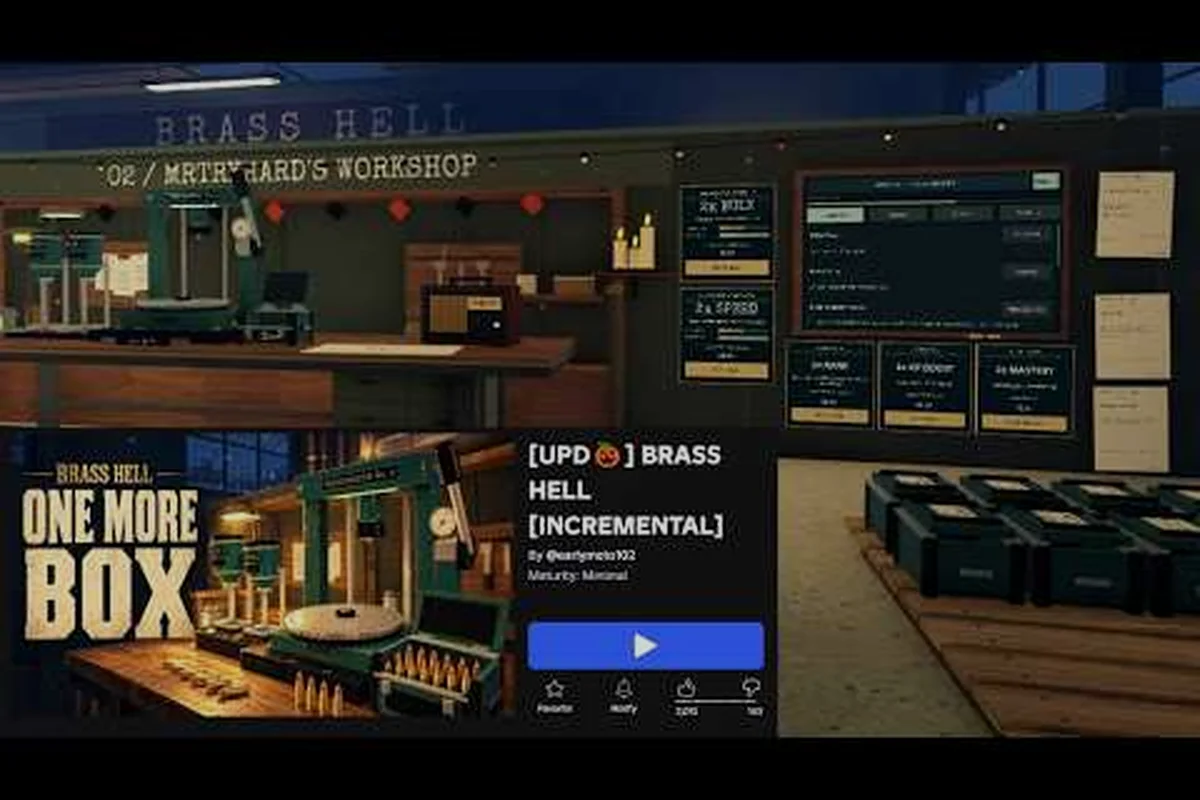
In BRASS HELL, solo progress comes from preserving cash flow instead of spending every payout on immediate upgrades. Chain deliveries to minimize travel time, prioritize Workshop tiers that improve core handling, and place Scavenger or similar income upgrades early so each completed run funds the next. When choosing between weapon rounds, favor ammunition that unlocks a stronger package or fills a specific combat need rather than simply adding another top-tier weapon; this creates dependable checkpoints toward major milestones while avoiding expensive dead-end purchases.
BRASS HELL How to Progress Solo: The Core Loop
The fastest solo route depends on keeping every shift productive without overspending too early. You need enough cash for the next meaningful purchase, a practical reason to visit each area, and a weapon capable of handling the orders that follow. That balance matters because buying a small upgrade immediately can leave you unable to afford a checkpoint-changing unlock several runs later.
A reliable cycle is to complete a delivery, collect the payment, and review your available purchases before leaving the relevant area. Keep only upgrades that improve your current loop or contribute to the next weapon tier. Avoid buying unrelated convenience items just because they are visible, since those purchases rarely move the campaign forward as quickly as ammunition and weapon access do.
Start with a repeatable income routine
Your early economy should be predictable. Choose orders that you can complete quickly, even if they are not the highest-paying options. Predictable income is more valuable than a risky order because a failed or abandoned delivery can leave you short exactly when you need the next unlock. Aim for enough money to make a purchase after every successful shift rather than saving indefinitely.
| Progression stage | Main goal | Money approach | Priority |
|---|---|---|---|
| Opening shifts | Learn delivery routes | Complete short orders repeatedly | Ammunition |
| First major purchase | Gain a stronger weapon | Save only after essentials | Weapon tier |
| Midgame | Reach the next workshop level | Mix regular deliveries with higher payouts | Ammunition access |
| Late game | Clear remaining checkpoints | Use efficient routes and stronger equipment | Required upgrades |
The exact prices and requirements can change with balance updates, so treat these as planning stages rather than fixed numbers. Community-reported progression data generally points to the same principle: steady early deliveries create the capital needed for fewer, higher-impact purchases later.
Think in checkpoints, not isolated upgrades
BRASS HELL checkpoints are the clearest landmarks for judging progress because each one should correspond to a visible change in your equipment or access. Instead of asking whether a purchase was useful, ask whether it helps you reach the next checkpoint. If it does not, it is probably optional for now.
This approach also makes the BRASS HELL unlock order guide easier to use. You are following a sequence of capability gains rather than a shopping list. Keep a small note of the next two upgrades you can realistically afford, and delay everything outside that short list until one of those milestones is secure.
For a broader view of the campaign stages, the BRASS HELL progression guide can help place your current objectives within the early, middle, and late portions of a solo run. For example, use the early checkpoints to stabilize income and basic weapon survivability, the mid-run checkpoints to fund the damage and mobility increases needed for tougher encounters, and the late checkpoints to prioritize access to the campaign’s final threats. This stage-based view prevents an early purchase from pulling cash away from a more urgent BRASS HELL milestone, especially when a difficult encounter has limited safe routes.
Unlock Ammunition Before the Next Weapon Tier
An effective unlock sequence begins with ammunition, moves toward the next weapon tier, and then expands your access to stronger rounds. The order matters because ammunition is the foundation of survival, while weapon improvements determine which orders become manageable. Saving every coin for a distant objective creates a long stretch of weak play, so spend only when the purchase unlocks a near-term milestone.
Stage 1: Establish ammunition reliability
During the opening portion, prioritize the standard ammunition needed for your starting weapon and keep enough money in reserve for the next essential purchase. The aim is not to become wealthy; it is to create a stable working budget. Every successful order should leave you either closer to the next ammunition upgrade or able to bank a larger contribution toward it.
| Checkpoint | What to verify | Why it matters |
|---|---|---|
| Starter ammunition covered | You can finish ordinary deliveries reliably | Prevents repeated loss of earnings |
| Core ammunition improved | The next shift feels manageable | Reduces trial-and-error during route learning |
| First weapon upgrade funded | A stronger option is within reach | Opens access to tougher orders |
| Workshop tier prepared | Required spending will not drain reserves | Prevents an avoidable economy reset |
Do not spread money across several low-impact items. Concentrating funds on ammunition continuity usually produces the best early-game efficiency because it supports every subsequent delivery. If an upgrade only improves handling without unlocking a stronger round or weapon, save it for later unless your current performance is genuinely struggling.
Stage 2: Buy the next weapon tier deliberately
The next meaningful weapon is often the best early progression target. Check its ammunition cost, compare it with the orders you can complete, and identify whether it requires a specific workshop tier. A more expensive weapon is not automatically better if its operating cost consumes the money needed for the next checkpoint.
Use this decision test: upgrade only when the weapon’s practical contribution exceeds its recurring ammunition cost. For example, if a shotgun lets you complete bulky orders that the starter weapon cannot handle, calculate the expected completion time and order payout before buying it; the faster clear may justify the expenditure. If the upgrade merely reduces handling friction while ammunition consumes cash needed for the next checkpoint, postpone it and preserve the larger milestone. In solo progression, each purchase should advance a checkpoint, workshop requirement, or order capability—not simply feel stronger.
| Question | Preferred response |
|---|---|
| Can I afford several uses before the next payment? | Upgrade |
| Will this weapon cover orders that the starter cannot? | Upgrade |
| Does its ammunition compete with the next checkpoint? | Delay or prepare the funds |
| Is the benefit limited to handling or convenience? | Treat as optional |
| Does it unlock access to a new workshop level? | Strongly prioritize |
This creates a practical BRASS HELL optimum unlock order: ammunition, next weapon capability, required workshop access, then supporting improvements. The order can flex if your current weapon stops handling available orders, but flexibility should be reactive rather than a reason to skip the plan.
Stage 3: Open the next workshop tier
Workshop progression is where solo efficiency can improve substantially. A new tier may improve equipment quality, expand available upgrades, or reduce the need to repeatedly replace basic gear. Treat it as a structural unlock, not simply a larger purchase, because it changes which future purchases are worth considering.
Before making the payment, review your ammunition plan and immediate order list. If both are stable, commit. If not, spend one or two extra shifts restoring the economy instead of forcing the purchase. A short delay is preferable to spending so aggressively that every later order becomes underfunded.
| Reward stage | Prepare before paying | Efficiency gained |
|---|---|---|
| Tier-one upgrade | Maintain basic ammunition reserves | Fewer replacement purchases |
| Tier-two unlock | Bank enough for routine orders afterward | Access to stronger equipment paths |
| Tier-three unlock | Confirm the next weapon requirements | Better long-term progression stability |
Players report that the most effective workshop purchases are those that preserve future purchasing power. This is a community observation rather than an official numerical rule, but it remains consistent with a sound solo economy: each large unlock should create room for the next series of improvements.
BRASS HELL Progress Faster Guide: Route and Money Management
The BRASS HELL progress faster guide is less about taking every high-value order and more about avoiding costly dead time. Set a spending target before each run, choose the shortest reliable route, and stop buying once that target is reached. A clear ceiling prevents the common mistake of spending an entire accumulated balance on optional equipment just before a major checkpoint.
Build each shift around one target
Choose one primary purchase for the next session. Examples include a specific ammunition upgrade, the next weapon tier, or a workshop level. Secondary upgrades can be considered only if they cost little and do not delay that target. This approach makes your income immediately useful instead of distributing it across a shopping spree with no milestone reached.
| Shift plan | What to buy | When to stop |
|---|---|---|
| Ammunition run | Required ammunition or its next tier | Once safe reserves are restored |
| Weapon run | The next affordable weapon | When several uses remain affordable |
| Workshop run | The required workshop payment | When the milestone is reached |
| Recovery shift | Nothing except ammunition necessities | When the previous target is funded again |
Keep a visible spending reserve outside your available purchasing balance. This prevents the common mistake of thinking a purchase is affordable when it would consume money reserved for ammunition or the next checkpoint. The reserve should at minimum cover routine operating costs between major payments.
Keep the route short and reliable
Short routes create a better progress loop because more of your time goes into completing orders rather than traveling. Learn where orders begin, where payment is received, and which routes lead back into productive areas. When a new area or weapon becomes available, repeat that route until it becomes routine before searching for marginal improvements.
Treat each session as a checkpoint rather than a race to spend every coin: finish a dependable delivery loop, record the coin total, and note whether the planned weapon, armor, or vehicle upgrade was actually unlocked. If damage, fuel use, or route time rises sharply, end the shift and bank the earnings before a risky order cuts into that milestone.
-
You reached the shift’s money target.
-
You unlocked the planned upgrade.
-
Your current loadout can no longer handle the intended order reliably.
When one of those conditions is met, move on or bank progress instead of trying to spend every remaining coin. The solo progression overview offers additional techniques for reducing wasted time while keeping each delivery loop stable.
Avoid expensive distractions
Several purchases can consume a run’s momentum without changing your access to weapons, ammunition, or workshop tiers. Before buying something nonessential, compare its price with the percentage of your next milestone it would consume. If one optional item would take up most of the funds needed for the next structural unlock, skip it.
| Tempting purchase | Immediate appeal | Better solo decision |
|---|---|---|
| Minor convenience item | Small quality-of-life gain | Defer until a checkpoint is secured |
| Duplicate equipment | Easier replacement | Use the existing item until it fails |
| Unrelated upgrade | Unlocks a side option | Save for after the next milestone |
| Essential ammunition | Keeps deliveries running | Buy before optional equipment |
This does not mean you should never improve convenience. It means convenience has a place after the important BRASS HELL milestones are secure. Early funds carry more value when they accelerate the next weapon, ammunition tier, or workshop access. For example, if a minor convenience item would consume half the funds required for the next workshop tier, defer it and preserve the larger purchase instead; the saved credits can unlock a stronger weapon or keep essential ammunition flowing through the current tier. A convenience upgrade becomes worthwhile once that structural milestone no longer changes your run’s progression speed.
BRASS HELL Milestones and Checkpoints
Tracking the right BRASS HELL milestones makes long runs feel controlled and reveals whether your economy is improving. The useful milestones are not vague goals such as “get better”; they are observable states such as stable ammunition coverage, access to the next weapon, a funded workshop tier, and the ability to handle a new order type with margin.
Use objective-based milestone tracking
Record four values at the end of each session: ammunition reserve, money toward the next weapon, money toward the next workshop tier, and the newest order type you can handle comfortably. This creates a simple dashboard without requiring external tools. If all four improve across several shifts, your route is working even when no purchase happened that day.
| Milestone | Evidence it is complete | Next action |
|---|---|---|
| Ammunition checkpoint | Several consecutive deliveries succeed without another purchase | Save for weapon access |
| Weapon checkpoint | New weapon handles available orders at a manageable cost | Review ammunition consumption |
| Workshop checkpoint | Tier is unlocked without emptying routine reserves | Check newly available upgrades |
| Order checkpoint | New order type is completed with comfortable margin | Explore the next target |
| Economy checkpoint | A full session reaches its intended savings target | Commit to the planned purchase |
This tracking also helps you recognize when progress has stalled. If your money rises slowly, a route may be inefficient. If you accumulate money but do not spend it, your next goal may be too large or poorly defined. If deliveries become harder before a weapon upgrade, move ammunition or weapon spending earlier.
Checkpoint review after every major purchase
Review what changed after buying a weapon or unlocking a workshop tier. Look at order time, ammunition consumption, and whether your remaining money can support several deliveries. A purchase should produce at least one measurable gain: faster completion, fewer consumable purchases, access to higher-value orders, or a smaller barrier to the next tier.
| Review point | Healthy result | Warning sign |
|---|---|---|
| Immediately after purchase | New option is usable | Purchase is unusable |
| After two deliveries | Routine orders remain affordable | Every run needs another purchase |
| After one session | Progress toward the next milestone is visible | No meaningful change |
| Before the next large purchase | Emergency reserve remains intact | Reserves are completely drained |
Do not treat one difficult order as a failed checkpoint. In BRASS HELL, difficulty may come from the delivery route, a shortage of the required ammunition, risky order selection, or simply an unfavorable payout, so isolate the cause before revising the run plan. For example, if a locked-door route caused two failed deliveries, compare it with an unlocked route that completed one order but earned less money; the second result may still be healthier for your next milestone. Track several consecutive deliveries: a repeated route failure suggests a structural problem, while scattered failures with one unusually costly order may indicate poor risk selection.
For specific upgrade criteria, the upgrade priority list can distinguish structural improvements from purchases that are merely convenient. Prioritize an upgrade when it improves a recurring bottleneck—such as ammunition throughput, delivery speed, or access to a more profitable order—rather than when it only opens an occasional alternative. For example, if the table shows that routine orders remain affordable after two deliveries, a weapon that reduces ammunition consumption may be a stronger milestone purchase than a workshop tier that is useful only during a difficult route. Compare the expected value of the next several orders with the remaining emergency reserve before committing funds.
Solo Progression for Difficult Orders and Late-Game Gaps
Late-game stalls often come from an upgrade gap rather than a lack of activity. If you can finish every order but cannot accumulate the next payment, change the route or target. If you have plenty of money but orders remain difficult, weapon access or ammunition is probably the bottleneck. Diagnosis prevents expensive random spending.
Match the order to your current capability
Choose orders with a predictable completion route whenever you need a large saving. High-value orders are useful when your current weapon makes them faster than ordinary deliveries, but they are poor bank builders when they require extra ammunition, long travel, or repeated attempts. Value per minute matters more than the number printed on the ticket.
| Current situation | Best order choice | Avoid |
|---|---|---|
| Need a quick saving | Short, familiar deliveries | Long multi-stage orders |
| Weapon clearly outclasses early orders | Higher-value contracts | Low-value routine work |
| Ammunition reserve is thin | Orders using your best-supported round | Ammunition-heavy contracts |
| Long route has not been tested | Practice the route before committing | High-value orders on unfamiliar ground |
| Workshop unlock nearly funded | Stable repeatable orders | Optional upgrades |
If a difficulty spike appears immediately after a checkpoint, return to the previous stable area and bank funds. Returning for one or two sessions is faster than repeatedly attempting a contract without the right equipment, because failures cost both time and potential income.
Break a stall into three separate problems
First, measure the income problem: are successful shifts producing enough money? Second, measure the equipment problem: are orders taking too many attempts or consuming too much ammunition? Third, measure the navigation problem: are travel and order selection wasting time? Solve only the failing category.
| Measured problem | Best correction | Result |
|---|---|---|
| Income too low | Shorten routes and improve order selection | More money per session |
| Equipment too weak | Shift funds toward ammunition or the next weapon | Higher completion reliability |
| Navigation inefficient | Practice the loop and simplify the route | Fewer idle minutes |
| Save target too large | Work toward an intermediate purchase | More visible checkpoints |
| Overspending | Separate operating funds from milestone funds | Larger reachable reserve |
This method keeps a solo run from turning into one long spending spiral. It also makes experimentation safer: you change one variable, observe several shifts, and keep the change only when the evidence supports it. The best progression path overview can help map those corrections to broader campaign goals.
Frequently Asked Questions
What is the fastest way to progress alone?
The fastest route combines repeatable early deliveries with disciplined saving for ammunition, a stronger weapon, and the next workshop tier. Avoid optional purchases until those milestones are secure, because each major unlock should make later orders easier and more profitable.
Should I buy every available upgrade early?
No. Purchase upgrades that restore ammunition efficiency, improve your current weapon, or unlock the next required workshop tier. For example, if an upgrade cuts ammunition use but leaves weapon damage unchanged, prioritize it only when it helps you complete more contracts without spending your reserve; otherwise, save for the stronger weapon first. Defer unrelated convenience items until major unlocks are secure, since spreading money across small purchases delays structural progression.
When should I attempt the next difficult order?
Attempt it after your current loadout can handle it with margin and your ammunition reserve covers several deliveries. If failures are frequent, return to routine contracts, improve the loadout, and retry once the order no longer threatens your emergency funds.
How do checkpoints help with solo progression?
Checkpoints turn solo progression into a measurable comparison between runs. After each weapon or workshop purchase, record delivery completion time, rounds spent, ammunition consumed, and savings left; for example, an upgrade that cuts ammo use per contract may be worth more than one that merely shortens travel time. Compare two or three contracts at the same checkpoint, since a single fast delivery can hide the purchase’s true cost.
What should I do when progression stalls?
Measure income, equipment, and navigation separately. Shorten inefficient routes if money is the issue, improve ammunition or weapons if orders fail too often, and select simpler contracts when savings are too low for another major purchase. For example, compare savings before and after a delivery: if travel consumes too much of the payout, choose a closer contract and preserve funds for the next workshop tier. If repeated orders drain ammunition, prioritize an ammo-efficiency upgrade before chasing a weapon with higher damage. Track these three bottlenecks separately, since improving navigation cannot offset a weapon that cannot reliably clear contracts.